Introduced by Parks Tau, President of UCLG, and by Jean Pierre Elong Mbassi, Secretary General of UCLG Africa, the meeting of mayors has made it possible to take stock of the preparatory process for the creation of the African Cities Development Fund – ACDF. The mayors and presidents of local authorities had decided to do this in Africities 7.
Parks Tau clarified the vision he had introduced in his introductory address of the Africities 8 summit, detailing the reasons and the main steps to establish the fund. The autonomous access of cities to financing is a major challenge for real decentralization.
The 40 participants validated the main conclusions stemming from the work of expert groups and from the meetings with potential partners, including African development banks. These options are :
– The choice of an organization that will ensure the control of mayors and presidents of local authorities over the fund and the independence of financial management from any political pressure. This management will be provided by professionals from the banking sector.
– The importance of pooling resources in all the dimensions of the management of the fund.
– The high priority given to securing excellent financial credibility, as a condition of access to the financial markets at competitive rates.
– The need for close cooperation with institutions and programs that support local authorities to improve their financial management.
– The indispensable support of States to authorize and facilitate the participation of cities and local authorities in the fund: subscription to the capital and then loans.
The exchange of views and ideas made it possible to specify points of attention, to be treated within the framework of the financial, legal and taxation studies which must now be conducted.
The participants validated the roadmap in all its components.
The steering and financing of the stage that will lead to the start of operations within 4 years will be provided by a club of founding cities and local authorities.
https://www.uclga.org/wp-content/uploads/2018/11/Photo-recommandation-des-sessions.jpg640960Gaellehttps://www.uclga.org/wp-content/uploads/2018/01/logo.jpgGaelle2018-11-21 10:58:512018-11-29 11:04:35Africities 8: Meeting of mayors – preparation of the African Cities Development Fund – ACDF
UCLG Africa is holding the 19th session of its Executive Committee on November 18, 2018 from 9:30am at the Sofitel Hotel in Marrakech, Morocco. The meeting is organized in collaboration with the Moroccan Association of Presidents of Municipal Councils (AMPCC) and is held as a prelude to the 8th Africities Summit that will take place under the High Patronage of His Majesty King Mohammed VI, from November 20-24, 2018 in the city of Marrakech. The theme of the summit is: “The transition to sustainable cities and territories: the role of local and subnational governments of Africa.”
This 19th session of the Executive Committee will focus, among other things, on the financial matters of the organization, including the adoption of the budget for the year 2019 for UCLG Africa and the holding of the elective General Assembly of UCLG Africa, scheduled for November 23, 2018 as part of the Africities 8 Summit.
The meeting will take place in the presence of:
– Mr. Khalid Safir, Wali, Director General of Local Authorities at the Ministry of the Interior,
-Mr. Mohamed Larbi Belcaid, Mayor of Marrakech.
–Mr.Mohammed Boudra, President of the AMPCC;
– Mr. Mpho Parks Tau, President of the World Organization of United Cities and Local Governments (UCLG) and Vice President of UCLG Africa for the Southern Africa Region;
– Mrs. Rose Christiane Ossouka Raponda, Mayor of Libreville, UCLG’s Vice-President for Africa;
– Mr. Christian Roger Okemba, Mayor of Brazzaville (Congo), Vice President of UCLG Africa for the Central Africa Region;
– Célestine Ketcha Courtès, President of the Network of Locally Elected Women of Africa (REFELA);
– Mr.Jean Pierre Elong Mbassi, Secretary General of UCLG Africa.
The meeting of the Executive Committee will be followed by a meeting of the Pan-African Council of UCLG Africa, on November 18, 2018 at the Sofitel Hotel in Marrakech. The participants in the Pan-African Council meeting will review the report of activities of the General Secretariat of UCLG Africa as well as updates concerning the organization of the 8th Africities 2018 Summit.
As a reminder, UCLG Africa’s Executive Committee is the body in charge of the political leadership of the organization. The Executive Committee is comprised of 16 members, 15 members equally representing each of the 5 regions of the continent, (3 for each of the 5 regions), plus the President of the Network of Locally Elected Women of Africa (REFELA). UCLG Africa’s Pan-African Council is made up of forty-five (45) active members, nine (9) for each African sub-region.
For the Africities Exhibition : www.SalonAfricites2018.com
https://www.uclga.org/wp-content/uploads/2018/11/CE.jpeg640960Gaellehttps://www.uclga.org/wp-content/uploads/2018/01/logo.jpgGaelle2018-11-16 08:47:572018-11-27 08:53:3219TH SESSION OF THE UCLG AFRICA EXECUTIVE COMMITTEE IN MARRAKECH
“For an Africa of all Transitions, for Cities and Regions as Drivers of Changes Strategies”
Press Release
Rabat, on 24 October 2018,
The flagship pan-African event of the United Cities and Local Governments of Africa (UCLGA Africa) will celebrate its 20th anniversary. It will bring together the 5,000 expected participants for creating a shared vision of the «Africa We Want».
By hosting the Summit for the second time in 10 years, the Kingdom of Morocco and all the Moroccan stakeholders, mobilized under the aegis of the Moroccan Association of Presidents of Communal Councils (AMPCC), support this event which amplifies «the Voice of Territorial Africa».
Press Notice
Under the High Patronage of His Majesty King Mohammed VI, Morocco hosts the Africities Summit for the second time, addressing the theme: «The Transition to Sustainable Cities and Territories: the Role of Territorial Communities of Africa.»
Indeed, it is a decisive role, as more than 60% of the Sustainable Development Goals (SDGs) adopted by the United Nations fall within the competence of territorial communities, as recognized by decentralization laws. The actual achievement of these objectives depends thus on the strong involvement of elected representatives, local public administrations, and territorial actors (communities, businesses, artists, women, young people, banking institutions, etc.).
The future of Africa and its evolution are increasingly played out at the level of the Continent’s cities and territories. Globalization and rapid urbanization are the two powerful trends that mark this evolution. These two trends have a significant impact on the development of African societies. They raise questions about the effectiveness of the current growth and development models pursued in the African context, and even prompt one to consider a paradigm shift in the way people think about the Continent’s sustainable development.
In choosing the theme of «the Transition to Sustainable Cities and Territories» for the Africities 2018 Summit, the territorial authorities of Africa have opted for a break proposal that justifies the urgency for a farreaching change in the growth and development patterns, and a paradigm shift in the Continent’s development in order to achieve the structural transformation sought by the African Union Agenda 2063. The Summit will discuss the various dimensions of transition, without disregarding the interactions they maintain among themselves: demographic, ecological, democratic and political, economic and social, geopolitical, as well as culture and communication.
It is further recognized that it is rather in cities and territories that the fight against climate change and poverty would be won or lost. This is why cities and territories of Africa are now key actors in the process of implementing the international agendas adopted by the United Nations in 2015 and 2016, and more particularly the 2030 Agenda for Sustainable Development (SDG), the Paris Agreement that builds on the United Nations Framework Convention on Climate Change (UNFCCC), the Nationally Determined Contributions (NDCs) for the implementation of the said Agreement, and the New Urban Agenda adopted in Quito, Ecuador. It is for the sake of raising awareness of the new responsibilities incumbent upon them and exploring the ways and means for fully assuming these responsibilities that the leaders of territorial communities of Africa invite all relevant stakeholders to explore with them at the Africities Summit, to be held from 20 to 24 November 2018 in Marrakech, the strategies to be defined and the paths to move along in order to start now the transition towards sustainable cities and territories in Africa.
This eighth edition is therefore a not-to-be-missed event for the territorial communities of Africa, and a significant anniversary date, as it marks the 20 years of existence and organization of the Africities Summits !
https://www.uclga.org/wp-content/uploads/2018/10/foule.jpg640960Gaellehttps://www.uclga.org/wp-content/uploads/2018/01/logo.jpgGaelle2018-10-24 12:33:452018-10-26 13:03:46Africities Summit 2018: 20 years of Pan-Africanism of Cities and Regions Celebrated in Morocco
From the 8th to 10th of October 2018, Gaborone, Botswana played host to the Africa Regional Meeting of the Policy Forum on Development (PFD). The Policy Forum on Development (PFD) is a multi-stakeholder platform that brings together Civil Society Organisations (CSOs), Organized Private Sector and Local Authorities (LA) from around Africa to dialogue on critical development issues. The PFD recognises the European Commission’s 2012 communication on the “The roots of democracy and sustainable development” which clarifies the definition of CSOs in all their diversity and specificities. The PFD is supported by the European Commission and provides a platform where identified stakeholders’ together with EU Members States meet to debate on development matters. The regional PFD is organized on a rotational basis in addition to an annual global meeting.
The 2018 edition of the Africa PFD focused on the recommendations which emanated from the November 2017 African Union (AU) – European Union (EU) Summit of Heads of States and Governments; the vision for the proposed post-Cotonou framework, and further examined the AU theme of the year on Combatting Corruption.
Observations
The Africa PFD witnessed extensive deliberations across critical development and governance issues. Subsequently, at the end of the three days, the PFD observed the following:
A mutual and balanced relationship between the African Union (AU) and the European Union (EU) is essential for both to play a leading role in world governance, now and the future. However, this relationship ought to be to be further cultivated and effectively harnessed for mutual benefit and to foster meaningful outcomes.
The PFD as a multi-stakeholder platform should be a model that seeks to contribute to facilitating dialogue across crosscutting development issues and sustain critical platforms that promote knowledge and information sharing between the two continents.
Climate change is a real challenge to both continents and is already disrupting livelihoods.
Rising inequalities on both continents is an issue of political and social concern for sustainable peace and development.
Africa has a youthful population that can be a demographic dividend or a bulge. This youthful population is often lacking requisite skills and competences to express their ingenuity and play their rightful role in the overall development of their societies and continent at large.
Existence and implementation of institutional frameworks and mechanisms that support effective governance systems are either lacking and/or not fully enforced in many countries. These countries also demonstrate very little corresponding political will to introduce and implement such systems.
Development at the national level has not been inclusive and has not reached the farthest behind in the spirit of the leave no one behind principle.
Leadership has a fundamental role in determining the development trajectory of States. The challenges in quality leadership can be directly attributed to slow development.
Corruption and illicit financial flows hurt everyone as necessary resources that are meant for the general good of huge populations are diverted for personal gain. The overall attainment of both the Agenda 2063 and the Sustainable Development Goals (SDGs) face existential and attainment threats due to pervasive corruption.
The evolving global context of migration greatly impacts on socio-cultural dynamics. The EU Neighbourhood Development and International Cooperation Instrument (NDICI) and the upcoming UN Global Compact on Migration presents a great opportunity to reengage on these issues.
The proposed European Investment Plan has the potential to contribute to Africa’s development. However, the involvement of the local private sector is so far limited.
The 20-year Cotonou Partnership Agreement comes to end in February 2020. The upcoming Post-Cotonou agreement negotiations provides a unique opportunity to re-define the AU-EU partnership.
Recommendations
In the spirit of dialogue and partnership of the PFD, the following recommendations were thus put forward:
Future AU-EU partnerships, including the bi-annual Summits of Head of States and Governments should embrace a multi-stakeholder approach that ensures the voice, contributions and priorities of all stakeholders are incorporated in all mechanisms. AU and EU should take steps to ensure that they are aligned in their future visions regarding the direction of the partnership, and the impact they will make.
The AU and EU should deliberately initiate and sustain mutually beneficial development models which will directly translate into clear improvements in the political and socio-economic wellbeing of the respective populations. These models should include development frameworks that adhere to the SMART principle that demonstrate clear-cut linkages between the initiatives and their impact.
Multi-stakeholder and multi-level engagement that seek to promote wider ownership and deepen local stakeholder reach across all spheres of society should be initiated. Therefore, a PFD approach should also be implemented at the national level to ensure important voices and concerns that represent the critical mass of societies are adequately captured and taken on board.
Given the persistent challenges of climate change, the partnership must adopt a sustainable approach to strengthen adaptation and mitigation interventions at all levels. The partnership should also support the implementation of the nationally determined contributions as prescribed by and agreed under the Paris Agreement.
The AU-EU partnership should strive to deliberately target inclusion and justice at all levels as a priority agenda.
The AU-EU partnership should give higher attention to making adequate investments in the continent’s youthful population, training them in requisite skills and competencies, providing opportunities and the enabling space which is essential to transform the continent to a digital age and a knowledge economy.
The AU-EU partnership should promote enabling environments that foster the contribution of all stakeholders to build effective institutional frameworks that are required for effective governance and development across the continent.
Strengthening local structures and fostering inclusive development initiatives should be at the heart of national efforts at implementing both the Agenda 2063 and the Sustainable Development Goals (SDGs).
The AU-EU partnership should promote the building of resilient institutions and capable leadership that is able to deliver on development outcomes.
Anti-corruption efforts must go beyond lip-service. The AU-EU partnership should advance efforts to use existing mechanisms to curb corruption and illicit financial flows, and where necessary, push for the creation of new mechanisms.
The AU-EU partnership should push towards a deeper understanding of migration issues and advance a common descriptive narrative that abolishes the innate contestation between the opposing views of migration being exclusively a security issue or it being a multi-dimensional human rights issue.
The implementation of the EIP should enhance an enabling business environment following a structured dialogue between all parties involved, including local private sector to ensure mutual benefits as well as inclusive economic development.
Negotiations for the Post-Cotonou Agreement should be undertaken in a timely manner and should take into adequate cognisance lessons learned from implementing the initial 20year Agreement, as well as changing dynamics and realities of the signing parties. African countries must anchor their negotiations within their commonly adopted visions and goals, especially Agenda 2063, Agenda 2030 and the Africa Continental Free Trade Area (AfCFTA), and marshal the best strategy to realise these.
Conclusion
The Africa PFD was a rallying point for advancing the development and governance dialogue amongst critical stakeholders. The Forum, like other previous editions saw the active participation of Regional Institutions, Trade Unions, Foundations, Diaspora, Civil Society Organizations, Organized Private Sector amongst other actors.
The Forum afforded the relevant partners a platform to reinforce commitments that promote mutually agreeable and beneficial African Union (AU) – Europe Union (EU) relations. In this regard, the Forum noted that identified gaps that exist within the current working frameworks as constituted, remain subject to further engagement with the relevant stakeholders as the debate remains an ongoing one for enhancing future relations and promoting safer, just and equitable societies for all.
https://www.uclga.org/wp-content/uploads/2018/10/regional_africa_meeting-4_1.jpg312820Gaellehttps://www.uclga.org/wp-content/uploads/2018/01/logo.jpgGaelle2018-10-11 15:36:182018-10-11 15:36:18Re-defining AU-EU Partnership Perspectives of CSOs, Private Sector and Local Authorities
New York, 2nd October 2018 – UN General Assembly, United Cities and Local Governments of Africa in collaboration with UN Habitat, UNODC and UNESCO will host the inaugural Youth Forum at the 8th Africities Summit which will take place from November 20-24, 2018 in Marrakesh, Morocco, under the theme: “Thetransition to sustainable cities and territories: The role of Local and Sub- national governments of Africa.” Africities summit is the flagship event of the pan African Organization United Cities and Local Governments of Africa (UCLG Africa) and is held every three years in one of the five region of Africa.
The 2018 Africities Summit is organized by UCLG Africa under the High Patronage of His Majesty King Mohammed the VI, in collaboration with the Moroccan Association of Presidents of Municipal Councils (AMPCC), the Association of the Regions of Morocco and the City of Marrakesh, and with the support of the Kingdom of Morocco. Around 5,000 participants are expected at the event, representing all the stakeholders of African local life as well as their partners from other regions of the world, including: African Ministers for Public Service, Urban Development and Housing, Decentralization and Local governments; African leaders of subnational and local governments; Representatives senior staff of national and local and subnational governments administrations; Representatives of the Business Sector; Civil Society Organisations; African Traditional and Moral Authorities; Researchers and Academia; Development Partners and International Cooperation Agencies, among others.
In recognition nearly 70% of Africa’s population is currently under 35 years UCLG Africa have made youth a primary focus for the development of Local Africa. To ensure that the voice of youth is heard, UCLG Africa has joined forces with UN Habitat, UNODC and UNESCO to organize youth development and leadership programs.
Therefore in order to celebrate its 20 anniversary, the Africities Summit has endeavored to set up and inaugurate the Youth Forum during this 2018 edition, in order to engage young people from across the continent and the diaspora to connect, share views and showcase innovative solutions that will create the Africa We Want. The Youth Forum includes a competition that is opened to young Africans aiming at harvesting as many new ideas as possible to accelerate the transition towards sustainable cities and territories in Africa, targeting Agenda 2030 of the United Nations and the Agenda 2063 of the African Union for the realization of “The Africa We Want”, and of the High Five priorities proposed by the African Development Bank to accelerate its implementation.
The competition will select 20 young Africans that will be invited to participate in Ideation workshops and a Creativity Lab consisting of a Cartoon Camp Challenge and a Virtual Reality Contest, around the topic of “Imagine a sustainable future for Africa and its cities and territories, in 2030 and 2063”.
With the support of partners, UN Habitat, UNODC and UNESCO young people will also be invited from across the continent and the diaspora to participate in workshops, discussion forums and side events that explore what we have coined the 5 areas;-
Economic and Social Empowerment
Education and Capacity Building
Good Governance, Integrity and Anti-corruption
Entrepreneurship, Employment and Job Creation
Urban Crime Prevention and Safer Cities (addressing the health and wellbeing of youth populations in cities and urban spaces)
At the end of the Summit we will have a youth development strategy and a set of project proposals that attempts to address and meet the needs of young people that has been identified for them by them.
https://www.uclga.org/wp-content/uploads/2018/10/1200-x-627-new_En.png6271200Gaellehttps://www.uclga.org/wp-content/uploads/2018/01/logo.jpgGaelle2018-10-01 08:53:102018-10-02 09:04:01The Future of African Youth : The Africa We Want by 2030
Today, the Head of Delegation of the European Union to Tanzania and to the EAC, H.E. Roeland van de Geer, together with the Secretary General of the United Cities and Local Governments of Africa, Jean Pierre Elong Mbassi, and the Chairman of the Association of Local Authorities of Tanzania, Hon. Gulamhafeez Abubakar Mukadam, have signed the grant contract for the 2018/19 Mayor Award Scheme in Tanzania.
Monday 17 September 2018, Dar es Salaam: Today, the Head of Delegation of the European Union to Tanzania and to the East African Community, H.E. Roeland van de Geer, together with the Secretary General of the United Cities and Local Governments of Africa, Jean Pierre Elong Mbassi, and the Chairman of the Association of Local Authorities of Tanzania, Hon. Gulamhafeez Abubakar Mukadam, have signed the grant contract for the 2018/19 Mayor Award Scheme in Tanzania.
For a total budget of EUR 666,637 (Approximately TZS 1,77 billions), this joint UCLGA-ALAT project aims to identify and acknowledge, every year, role models in local leadership in terms of promoting effective service delivery, local economic development and good governance at subnational levels in Tanzania. It aims to promote a performance-based, service delivery-oriented, citizen-centred local governance system that favours the emergence and consolidation of accountable, participatory and inclusive local governments in the country.
During his speech Ambassador Roeland van de Geer stated that “We wish to commend UCLGA and ALAT for their joint efforts to relaunch the Mayors Award Scheme in Tanzania. This is a unique opportunity to promote innovative and locally driven projects among Tanzanian LGAs. LGAs are key actors of the sustainable development of any country in the world and the EU is proud to support this joint effort in Tanzania and beyond”.
Speaking during the launch, Mr Mbassi said that “UCLG Africa conceived the Mayors Award Scheme as a richly stacked initiative intended to benefit both the local governments and the communities that they serve. We remain committed to that cause and, therefore, confident that the partnership entered into with the EU and ALAT, will go a long way in unlocking many of the challenges faced in implementing the earlier editions of the MAS. Allow me stress that this partnership cannot be complete without the involvement of the media, academia, civil society, private sector and local communities.”
Hon. Gulamhafeez Abubakar Mukadam concluded that “The 2018/19 Mayors Award Scheme (MAS) will be launched on the 25th of September and all Mayors and Chairpersons will be invited to document their projects of the year. The best initiatives will be selected by an impartial committee and presented, as best practices, at the next ALAT’s AGM. Awards will be granted to the best performing LGAs. May the best project win!”
Background:
The Mayors Award Scheme (MAS) is a Pan African initiative, launched in 2014 by United Cities and Local Governments of Africa (UCLG Africa). It aims to celebrate the performance of local governments and local service delivery to the citizens in Africa.
The MAS was already organised in Tanzania in 2015 and 2016, as well as in other African countries (Ghana, Cape Verde and Angola)
During 2016 edition in Tanzania, the following LGAs were selected for their best initiatives: Tanga, Arusha and Mbeya for the Cities; Iringa, Tabora and Shinyanga for Municipalities; Masasi, Njombe and Ushetu for the Town & District Council. The overall winner – Ushetu District Council – was awarded a tractor.
Source : EU Press and information team of the Delegation to TANZANIA
https://www.uclga.org/wp-content/uploads/2018/09/roe_2.jpg17072560Gaellehttps://www.uclga.org/wp-content/uploads/2018/01/logo.jpgGaelle2018-09-17 21:24:582018-09-30 21:35:53EU supports the “2018/19 Mayors Award Scheme in Tanzania”, a joint initiative by UCLG Africa and ALAT
The 8th edition of the Africities Summit will take place from November 20-24, 2018 in Marrakesh, Morocco, under the theme: “Thetransition to sustainable cities and territories: The role of Local and Sub- national governments of Africa.” The Africities summit is the flagship event of the pan African Organization United Cities and Local Governments of Africa (UCLG Africa). The summit is held every three years in one of the five regions on the continent.
The Africities 2018 Summit will be organized by the Kingdom of Morocco, UCLG Africa, and the Moroccan Association of Presidents of Municipal Councils (AMPCC). 5000 participants are expected at the event, representing all the stakeholders of African local life as well as their partners from other regions of the world, including: The Ministers (for local governments), The Ministers for housing and urban development, public service, finance, leaders and officials of city and subnational governments, representatives of the business sector, civil society organizations and trade unions; traditional and moral authorities, researchers and academia, development partners and international cooperation agencies, among others. For this edition, a special focus will be given to youth.
To ensure that the voice of youth is heard, UCLG Africa has joined forces with BEES 55, a solidarity network that focuses on programs that create jobs and develops entrepreneurs, to organize the Youth Forum-Creative Lab. UN Habitat – Safer Cities Program, and UNESCO – Science, Technology and Innovation have also pledged their support for Africities Youth Forum.
In the framework of the 2018 Africities Summit Youth Forum, a competition has been launched that is open to young Africans. It aims is to harvest as many ideas as possible that will accelerate the transition towards sustainable cities and territories in Africa, targeting the main Global Agendas (Agenda 2030 of the United Nations for the implementation of the Sustainable Development Goals (SDGs); Agenda 2063 of the African Union for the realization of “The Africa We Want,” and the five priorities (High Five) proposed by the African Development Bank to accelerate its implementation). Its main objectives are to contribute to find the best strategies to improve the living conditions of Africans and define solutions to accelerate the dynamic of integration, peace building and unity on the continent, starting from its territories.
The Youth Forum is open to young Africans aged between 15 and 35, from Africa and from the Diaspora. The competition aims to select 20 young Africans who will be invited, free of charge, to the 2018 Africities Summit, where they will participate in a Creativity Lab consisting of a Cartoon Camp Challenge and a Virtual Reality Contest. The topic will be “Imagine a sustainable future for Africa and its cities and territories, in 2030 and 2063.”
Those selected to participate in the Creative Young Innovators Lab will be required to work during the first 4 days of Africities (from November 20 to 23, 2018) in:
The Cartoon Camp Challenge; helping the participants to project themselves into the future. The Cartoon Camp promotes a mindset conducive to innovation. Building dreams is at the root of any innovation project. The Cartoon Camp will help participants to think about smart cities and smart economies based on African values and ways to produce an adequate standard of living for Africans. The Cartoon Camp will allow young people to think about Africa with all its imperfections and all its qualities and to suggest solutions inspired by local know-how and also by new technologies. Projects may concern: the organization of city systems in different countries or the continent as a whole; spatial planning or organization of a city in a country of interest; proposals for different types of construction, buildings, housing, equipment, street furniture or any other product, that highlights a dynamic, sustainable development, takes into account the latest technological developments, and respect the most fundamental African values.
The Virtual Reality Contest that will consist of a hackathon competition. Participants will conceptualize, create and plan prototypes of IT solutions to speed up the transition towards sustainable cities and territories in Africa, with priority given to the following areas: energy solutions, food security, access to water and sanitation services, waste management and waste valorisation, development and maintenance of infrastructure for transport, mobility and telecommunication, tourism, culture and heritage, education, health systems, other solutions…
The qualified prototypes will then be submitted to the Africities 2018 delegates for the selection of the 3 best projects from the Creative Lab, Virtual Reality Category. Submissions will take place during the AWARD Ceremony of the closing Gala Dinner on November 24, 2018. For each category, 3 laureates of the Africities 2018 Young Innovators will receive respectively: • 1st Position: 5,000 euros • 2nd Position: 3,000 euros • 3rd Position: 1,500 euros. In addition, the winner of each category (1st Position) will benefit from a 1-year mentoring program to further develop their projects with the assistance of senior professionals identified by the organizers. It’s time for youth to make a change on the continent.
Send a 4 page storyboard explaining your ideas, with an annex of support illustrations that may include drawings, plans, diagrams, virtual images, IT tools, etc., depending on the category you are entering, (Cartoon Camp or Virtual Reality).
The storyboard and annexes must be received no later than September 30, 2018 at 17:00 GMT.
https://www.uclga.org/wp-content/uploads/2018/09/Africities-Flyer7-En-001.jpg16841190Gaellehttps://www.uclga.org/wp-content/uploads/2018/01/logo.jpgGaelle2018-09-11 16:36:512018-09-21 11:39:12Challenge African Youth: Showcase solutions for the Africa We Want at the 2018 Africities Youth Forum
The conference, “Fighting corruption at the local level, a sustainable way to transform Africa from its territories”, will take place on Friday August 10, 2018, 9:30 to 13:00, at the Headquarters of the Ministry of Culture and Communication of the Kingdom of Morocco (BAHNINI HALL). Organizers working in partnership are The Government of the Kingdom of Morocco; the Pan African organization, United Cities and Local Governments of Africa (UCLG Africa); the Association of Regions of Morocco (ARM); and the Moroccan Association of Presidents of Municipal Councils (AMPCC).
The conference will be part of the celebrations for the African Union’s African Day of Decentralization and Local Development (JADDL), a day declared by the AU under Article 20 of the African Charter on the Values and Principles of Decentralization, Local Governance and Local Development, as adopted at the Ordinary Session of the Conference of Heads of State and Government, held June 26 -27, 2014 in Malabo (Equatorial Guinea).
Reducing corruption is a priority for the African Union, with 2018 dedicated to the fight against this scourge under the theme: “Fighting corruption at the local level, a sustainable way to transform Africa from its territories“, divided into two sub-themes respectively:
– Corruption and conflict of interest in the management of local authorities: an impediment to the basic services to local populations, social justice and peace to local populations;
– Good local governance and promotion of the role of civil society and the media: guarantees for success in curbing corruption in these areas.
The conference will address the issue, with the aim to promote and celebrate the values and principles of the African Charter of Decentralization, Local Governance and Local Development through:
The review of the African Charter on the Values and Principles of Decentralization, Local Governance and Local Development;
The sensitization of local elected officials, women local elected officials and territorial managers on the impact and harmful effects of corruption and conflicts of interest in the management of local affairs, citizens, social justice and peace, and consequently, on sustainable development;
Raising awareness on the role of civil society and the media as key stakeholders in the fight against corruption at the territorial level.
According to the 2017 Transparency International Index of Perceptions of Corruption, corruption continues to flourish in Africa with Sub-Saharan Africa as the worst-performing region, with an average score of 32. This impacts on local governments, charged with the responsibility of delivering basic public services to their constituents. The “shortfall” generated by corruption is a serious obstacle to the achievement of Agenda 2063 (The Africa We Want) and Agenda 2030 (the 17 Sustainable Development Goals), with 65% of their successful implementation dependent on local level activites. Most notably, SDG 16, aims to curb corruption and bribery in all its forms (Target 16.5) and to set up efficient, accountable and transparent institutions at all levels (Target 16.6 ). To achieve this, the fight must begin at the local level.
The conference will aim to bring concrete proposals based on the recommendations made by the participants in the 2018 United Nations Forum on Public Service during the Side Event organized by the Specialized Technical Committee No. 8 of the African Union on Public Service, Local Governments, Urban Development and Decentralization, UCLG Africa and its African Local Government Academy (ALGA) on “Transparency, integrity and the fight against corruption : A key requirement for the achievement of Sustainable Development.”
The official opening of the Conference will be led by Representatives from:
The Ministry of Foreign Affairs and International Cooperation.
The Ministry of Home Affairs;
The Ministry of Culture and Communication;
The Association of Regions of Morocco (ARM);
The Moroccan Association of Presidents of Municipal Councils (AMPCC) ;
The Secretary General of UCLG-Africa, Mr. Jean Pierre Elong Mbassi.
Nearly 300 stakeholders in local governance in Morocco are expected to attend the conference, the first of its kind since the return of the Kingdom of Morocco to the African Union family.
The national and international press (based in Morocco) is invited to cover the opening ceremony on Friday August 10, 2018 at 9:30am at the Headquarters of the Ministry of Culture and Communication of the Kingdom of Morocco (BAHNINI HALL), No. ° 1, Ghandi Street, Rabat.
https://www.uclga.org/wp-content/uploads/2018/07/BANNIERE-Journée-de-la-decentralisationEN.jpg405810Gaellehttps://www.uclga.org/wp-content/uploads/2018/01/logo.jpgGaelle2018-08-08 10:39:402018-08-08 15:09:46Celebration of the African Day of Decentralization by the Kingdom of Morocco and UCLG Africa
The African Local Governments Academy (ALGA) of United Cities and Local Government of Africa (UCLG Africa) will organize the 2nd Focus Group of the Observatory on Human Resources of Local and Regional Governments in Africa, on Thursday 5 July 2018 at “La Tour Hassan” hotel, in Rabat (Morocco) from 8.30am. The topic is: “Human Resources Management at the local level in Northern Africa: Statutes and Mechanisms of motivation.”
This 2nd Focus Group is a follow up the 1st held in Accra, Ghana on 30 May 2018 and it fits in with the operationalization framework of the Observatory on the Human Resources of Local and Regional Governments in Africa. Indeed, UCLG Africa and its ALGA Academy are launching a study on “The State of the Human Resources of Local and Regional Governments in Africa” whose main objective is to conduct a first assessment of the situation of HRM at the local level in Africa, highlighting the main problems and challenges encountered in this area. The objective is also to enable UCLG Africa, its Members and Networks as well as all the other stakeholders involved to move resolutely towards a holistic, inclusive and participative approach able to put HRM on the path of reform and modernization in Africa.
It should be recalled that the African Union Agenda 2063 as well as other Global Agendas (The 17 SDGs, the New Urban Agenda, the Climate Agenda, the Sendai Framework for Risk Reduction and the Financial Agenda) have a prime territorial dimension. Their implementation has a local dimension by nature and a large part of their implementation comes under the responsibility and competence of the Local and Regional Governments. The International Community recognizes that over 60% of the SDGs and the Nationally Determined Contributions under the Paris Agreement on Climate Change (NDCs) cannot be implemented without the effective and active participation of the Local and Regional Governments. To achieve this implementation, it is essential for the Local and Regional Governments of the Continent to have quality human resources, committed, active, competent, professional and ethical. However, in most African countries, Human Resources Management (HRM) is presented as one of the weak links in the reform or modernization of public administration.
The launched study will lead to the preparation of the 1st Report on the state of HRM at the level of African Local and Regional Governments. In order to collect the data necessary for the preparation of this Report, UCLG Africa and its Academy will rely on several sources of information, namely the development and dissemination of questionnaires, the organization of 3 Focus groups in Accra, in Ghana (for the English speaking systems), in Ouagadougou, Burkina (for the French speaking systems) and in Rabat, Morocco (for the North African systems).
The main objectives of this 2nd Focus Group are to:
– Create a space, a moment of exchange and brainstorming between the stakeholders directly involved in HRM at the local level;
– Listen to and collect the opinions of participants on HRM at the local level in North Africa;
– Grasp the challenges facing HRM at the local level in North Africa;
– Identify the good practices in this area;
– Identify the experience of each participating country in terms of regulation of the status of the staff of Local and Regional Governments;
– Exchange on the mechanisms and good practices in terms of motivation of Human Resources at the local level ;
– Define the standards in terms of HRM of Local and Regional Governments with the participants.
The Focus-Group will be attended by about 30 people representing a sample including the main stakeholders concerned by the problems of HRM at the local level in Africa among whom: representatives of the Central Government, Local and Regional Governments, (Town/ City Clerks, Chief Financial Officers, Chief Technical Officers, Human Resources Managers), Professional Networks of Local Managers, representatives of Local and Regional Governments Staff Unions, Training Institutes targeting Local and Regional Governments in Africa, experts in HRM, resource persons and partners.
This activity will also witness the participation of representatives from Algeria, Mauritania and Tunisia.
The 1st Report on the state of HRM at the level of the African Local and regional Governments will be presented at the Africities 8 Summit in Marrakech from 20 to 24 November 2018.
For further information, please contact: Gaëlle Yomi: Tel.: + 212 610 56 71 45
Email: gyomi@uclga.org
https://www.uclga.org/wp-content/uploads/2018/07/IMG_5226-1.jpg19202560Gaellehttps://www.uclga.org/wp-content/uploads/2018/01/logo.jpgGaelle2018-07-05 18:15:112018-07-16 10:56:16ALGA Organize the 2nd Focus Group of the Human Resources Observatory of Local and Regional Governments in Africa
As part of the organization of the 2018 United Nations Public Service Forum that will take place in Marrakech, in the Kingdom of Morocco from June 21- 23, 2018, under the High Patronage of His Majesty King Mohammed VI, the Specialized Technical Committee on Public Service, Local Government, Urban Development and Decentralization (STC-8) of the African Union, in partnership and with the support of the United Nations Department of Economic and Social Affairs (UN DESA), the Ministry in Charge of Administration Reform and the Civil Service of the Kingdom of Morocco, the Islamic Educational, Scientific and Cultural Organization (ISESCO), the United Cities and Local Governments of Africa (UCLG Africa) and its African Local Governments Academy (ALGA), will organize a side event on: “Fighting Corruption and Promoting Integrity and Transparency at the Local Level in Africa: Time to Act is Now!” that will take place on Friday, June 22, 2018, at the Palmeraie Golf Palace, Room Arganier from 9h00 to 13h30.
The forum, which marks the celebration of the 10th edition of the International Public Service Day, commemorated on June 23rd of each year, will have the theme: “Transforming governance to realize the Sustainable Development Goals”. The meeting will enable ministers and other key decision makers to discuss how governments, institutions and public administrations can organize and work together to achieve the Sustainable Development Goals (SDGs). The forum will also look at how governments and public institutions can be more effective, inclusive and accountable in line with the commitment of the international community, including the Sustainable Development Goal 16, «Promote peaceful and inclusive societies for sustainable development, provide access to justice for all and build effective, accountable and inclusive institutions at all levels».
As part of their contribution to the forum, STC N° 8 and UCLG Africa have chosen to focus on target 5 of SDG 16: «Substantially reduce corruption and bribery in all its forms». Corruption is a phenomenon that affects all levels of governance (international, national, regional and local), as well as all actors involved in the dynamics of development and progress, whether States, governments, communities, private sector or the different components of the civil society. At the level of African regional and territorial governments, corruption erodes the ability of local governments and traditional institutions to deliver services effectively and discourages local economic development. Member States of the African Union (AU) have dedicated the Year 2018 to «the fight against corruption» under the theme, «Winning the Fight against Corruption: A sustainable path for Africa’s Transformation».
The side event on: «Fighting Corruption and Promoting Integrity and Transparency at the Local Level in Africa: Time to Act is Now!” will have as its main objective the definition of concrete modalities of implementation at local level in Africa of the various instruments adopted and commitments made, both globally and at African level, concerning the prevention and fight against corruption as well as the promotion of transparency and integrity in the governance of the territories. These include the United Nations Convention against Corruption (UNCAC), known as the Merida Convention, the Sustainable Development Agenda, the Climate Agenda, the Sendai Framework on Disaster Risk Reduction, the Addis Ababa Action Agenda on Financing for Development, the African Agenda 2063, the African Union Convention on Preventing and Combating Corruption, the African Charter on Public Service and finally the African Charter on the Values and Principles of Decentralization, Local Governance and Local Development, adopted in Malabo in 2014, which is inspired by a series of core values, including integrity, transparency and accountability.
The specific objectives of the side event are:
To discuss the issue of corruption, transparency and integrity at the local level and its link with the implementation of the SDGs;
To sensitize local elected officials and territorial managers on the impact and harmful effects of corruption on sustainable development;
To exchange experiences and practices implemented in different regions of the world to prevent and cope with corruption and to anchor integrity and transparency in public institutions, especially at the local level;
To identify concrete actions and relevant and sustainable tools to be put in place at the local level to combat corruption and anchor transparency and integrity in the process of decentralization and civil service in Africa;
To inscribe and anchor the CTS N° 8 action in the new dynamics initiated by the African Union in its fight against corruption.
During the forum, UCLG Africa and its African Local Governments Academy (ALGA) will also participate in the Workshop of the UN DESA on «Governance to Localize the Sustainable Development Goals». This workshop will focus on SDG 11: «Making cities and human settlements inclusive, safe, resilient and sustainable». It should be remembered that the role of local and regional governments is essential and crucial to implement and achieve the SDGs, of which 65% of their implementation is at the local level, given their proximity and understanding of the challenges facing their communities and populations. Local governments are in a unique position to engage all the actors and all stakeholders in the design of development policies and strategies. They are also well positioned to identify urgent needs, priorities and gaps to improve the delivery of public services. The most visible and concrete actions will have to be taken at the local level or never!
https://www.uclga.org/wp-content/uploads/2018/06/Photo-CP-ALGA-EN.png3221157Gaellehttps://www.uclga.org/wp-content/uploads/2018/01/logo.jpgGaelle2018-06-19 12:30:282018-07-25 12:25:08Fighting Corruption and Promoting Integrity and Transparency at the Local Level in Africa: Time to Act is Now!


 Introduced by Parks Tau, President of UCLG, and by Jean Pierre Elong Mbassi, Secretary General of UCLG Africa, the meeting of mayors has made it possible to take stock of the preparatory process for the creation of the African Cities Development Fund – ACDF. The mayors and presidents of local authorities had decided to do this in Africities 7.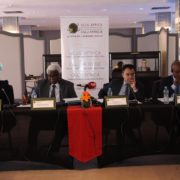
 UCLG Africa is holding the 19th session of its Executive Committee on November 18, 2018 from 9:30am at the Sofitel Hotel in Marrakech, Morocco. The meeting is organized in collaboration with the Moroccan Association of Presidents of Municipal Councils (AMPCC) and is held as a prelude to the 8th Africities Summit that will take place under the High Patronage of His Majesty King Mohammed VI, from November 20-24, 2018 in the city of Marrakech. The theme of the summit is: “The transition to sustainable cities and territories: the role of local and subnational governments of Africa.”
 The flagship pan-African event of the United Cities and Local Governments of Africa (UCLGA Africa) will celebrate its 20th anniversary. It will bring together the 5,000 expected participants for creating a shared vision of the «Africa We Want».
  The future of Africa and its evolution are increasingly played out at the level of the Continent’s cities and territories. Globalization and rapid urbanization are the two powerful trends that mark this evolution. These two trends have a significant impact on the development of African societies. They raise questions about the effectiveness of the current growth and development models pursued in the African context, and even prompt one to consider a paradigm shift in the way people think about the Continent’s sustainable development.
 From the 8th to 10th of October 2018, Gaborone, Botswana played host to the Africa Regional Meeting of the Policy Forum on Development (PFD). The Policy Forum on Development (PFD) is a multi-stakeholder platform that brings together Civil Society Organisations (CSOs), Organized Private Sector and Local Authorities (LA) from around Africa to dialogue on critical development issues. The PFD recognises the European Commission’s 2012 communication on the “The roots of democracy and sustainable development” which clarifies the definition of CSOs in all their diversity and specificities. The PFD is supported by the European Commission and provides a platform where identified stakeholders’ together with EU Members States meet to debate on development matters. The regional PFD is organized on a rotational basis in addition to an annual global meeting.
 New York, 2nd October 2018 – UN General Assembly, United Cities and Local Governments of Africa in collaboration with UN Habitat, UNODC and UNESCO will host the inaugural Youth Forum at the 8th Africities Summit which will take place from November 20-24, 2018 in Marrakesh, Morocco, under the theme: “The transition to sustainable cities and territories: The role of Local and Sub- national governments of Africa.” Africities summit is the flagship event of the pan African Organization United Cities and Local Governments of Africa (UCLG Africa) and is held every three years in one of the five region of Africa.


 The African Local Governments Academy (ALGA) of United Cities and Local Government of Africa (UCLG Africa) will organize the 2nd Focus Group of the Observatory on Human Resources of Local and Regional Governments in Africa, on Thursday 5 July 2018 at “La Tour Hassan” hotel, in Rabat (Morocco) from 8.30am. The topic is: “Human Resources Management at the local level in Northern Africa: Statutes and Mechanisms of motivation.”
