The Compact of Mayors: Mayors Commitment on Climate

The Compact of Mayors is a global coalition of the world’s leading mayors and city leaders committed to ambitious and transparent climate action. At the UN Climate Summit last September, C40, ICLEI and UCLG launched the Compact of Mayors in partnership with UN Secretary-General Ban Ki-moon, his Special Envoy for Cities and Climate Change, Michael R. Bloomberg and UN-Habitat.

In this regard, C40, ICLEI and UCLG are calling all mayors and city leaders of the world to join the initiative and demonstrate their commitment on climate in order to support the collective impact of city action, which is not yet well known on the global stage. The Compact of Mayors aims to recognize both new and existing local climate commitments, and make sure that these are recognized globally.

By connecting to two recognized reporting platforms – carbonn Climate Registry and CDP – cities of all sizes can share their commitments publicly and report consistently on targets, activities and impact via either platform. This way, cities can visibly demonstrate their collective investment in a sustainable future. These commitments will also be communicated to the UNFCCC’s repository for non-state action actors, NAZCA – profiling the city’s leadership.

As the umbrella organization of local governments of Africa, UCLG Africa is inviting all its members to join the initiative and demonstrate their commitment on climate by taking the first step and submitting a letter to indicate their commitment through the carbonn or CDP platforms or sending directly to info@uclg.org

For more information about the Compact of Mayors and how to become involved, you can visit the initiative website: www.compactofmayors.org


First UCLG Africa Regional Seminar-West Africa, Dakar, Senegal

The proceedings of the first UCLG Africa Regional Seminar of West Africa held in Dakar, Senegal, were closed Wednesday, August 5, 2015.

This seminar falls within a series of regional seminars organized by UCLG Africa and scheduled in the upcoming months in the other regions of Africa.

The West Africa seminar was placed under the theme: “African Local Governments – Contribution to the Unity of Africa”. It witnessed the participation of fifteen countries of the West Africa Region represented by the Chairmen of National Associations of Mayors and their Permanent Secretaries as well as the major cities in the countries that do not have national associations of Local Governments.

The first day of the seminar helped to upgrade the knowledge of the participants regarding the evolution of the environment for the action of local governments, both in Africa and at the world level.

The second day was devoted to the review of the place of local governments of West Africa in the network of United Cities and Local Governments of Africa (UCLG-A) and in the network of the world organization of United Cities and Local Governments.

The third and last day addressed the issue of participation of West Africa in the 7th edition of the Africities Summit to be held at the Sandton International Convention Center, in Johannesburg, South Africa, from 29 November to 03 December 2015.

Read more in the Press Release here.

The seminar’s report will be available soon


Financing for Development Conference in Addis Abeba

During the Financing for Development Conference in Addis Abeba, on 13-16 July 2015, a  side event on “Urbanization and municipal finance: financing planned city extensions” was organized by UN Habitat and the Global Task Force of Cities and Regional Governments.


UCLG Africa Secretary General participated in the side event organized on 14 July 2015 on the theme of financing planned city extensions in the framework of Financing for Development Conference in Addis Ababa, Ethiopia.

In her opening remarks Mrs. Aisa Kirabo, Deputy Executive Director, UN Habitat, set the current political context of cities, with increasing inequalities, growing exposure to the impact of climate change, unsustainable economic growth path. We are facing growing influx of population in cities and the pace of urban migration is greater than the capacity of cities to house them in an appropriate way. This is why, we should plan for city extensions, in order to create the vibrancy and sustainability we need for our cities.

We need a good national urban policies and a good city plan with the right financial business model for the plan to be implemented. We need an enabling environment, especially around land use and land-value-capture models, to guide the urban design and investments. All various stakeholders have a stake in this matter and partnership is key in the implementation of efficient urban policies and strategies.

In his setting the context of the session, Marco Kamiya, UN Habitat, Urban Economy Branch, presented the three-legged approach being developed by UN Habitat, with:

1) Planned city extension;

2) Legal framework and governance, starting with street naming and providing an address to the people for them the acquire an official existence;

3) Urban economy and municipal finance.

He informed that tax revenue represents 34 % of indigenous revenue GDP for developed countries, and only 13% in developing countries. He insisted on the need to push for more dense cities, because the more density, the more productivity, the more land value, the more energy efficiency, and the more structured land markets.

This three-legged approach can be also integrated in big infrastructure projects, so that a share of the cost of the projects preparation can be devoted to place these projects into a comprehensive city plan.

The panel discussion that followed included Mr. Luiz de Mello from OECD; the director of the African Development Bank regional office for East Africa; the Mayor of Johannesburg, Mr. Mpho Parks Tau; and Joris van Etten, Programme Coordinator, Cities Development Initiative for Asia, an Asian Development Bank initiative backed by international partners such as Austria, Sweden, Switzerland, and the Shanghai Municipal Government.

The Mayor of Johannesburg said that cities of South Africa were planned in a non-inclusive basis, following apartheid-led logic. To face and curve the apartheid legacy, the city of Johannesburg has initiated a three-sponged approach, namely:

1) The creation of corridors of freedom which aims at connecting the townships to the inner city through the building of an integrated BRT for improved mobility, and the development of carefully planned and designed areas to contribute to increasing the density in these corridors;

2) The initiation of a human settlements regularization process to harness the possibility of business and job creation within the neighborhood;

3) The promotion of a scheme for co-production of municipal services with the local communities, with as the result to foster ownership of the city by the townships city dwellers, and at the same time, contribute to the maintenance of infrastructure by its principal users.

City of Johannesburg is also looking at innovative financial instruments such as access to green finance; PPPs on water, energy sectors, or other infrastructure; retail bonds issued for city dwellers to contribute to the financing of infrastructure in their neighborhood, which benefit from the same level of guarantees than the bonds issued by the City in the Johannesburg stock exchange, pool funding mechanisms and vehicle.

The implementation of these innovative instruments supposes that the city is granted appropriate institutional enabling frameworks. The prime concern of the city is to care about financing of human development, hence the effort of the city to promote innovative solutions, including on financing that can make the city more inclusive.

In his address, the regional director, AfDB, reminded that 2 out of 3 city dwellers in Africa live in slums. Cities are however becoming the center of gravity for many things and they need to find innovative ways of financing. The challenges facing cities are intertwined and horizontal and integrated by nature. This is why cities are key to the definition and implementation of the territorial approach to the development and for localizing the implementation of the SDGs.

Cities can raise a lot of money. But they face important constraints among which the issue of informality ; the lack of proper land registration and titling system;  the low purchasing power of the majority of urban dwellers; the low tax take and low capacity of local fiscal administration.

What could be the way forward? The regional director, AfDB, mentioned five areas of improvement:

1) Drastically improve domestic resource mobilization, mindful that external finance will always remain secondary to domestic resources to finance the development of the city. External finance include resources coming from the national governments through fiscal decentralization frameworks, and resources coming from abroad, through ODA, PPPs, or other mechanisms;

2) Drastically improve the financing governance of cities through adopting transparency and accountability systems informed by appropriate financing information systems;

3) Simplify the local taxation system and adopt predictable timelines for the payment of local taxes;

4) Pay more attention to the enhancement of the financial and banking system, in particular to the transformation of short-term savings into longer-term investments loans;

5) Have cities credit-rated so that they can access the financial market and embark in meaningful PPPs deals.

Luiz de Melo from OECD Insisted on the management of tax administration. Planning city extensions need appropriate instruments. He emphasized the need to consider the issue of governance as critical to improving the capacity of local governments to mobilize financing. He called the attention to the need to adopt a multi-level approach to governance, highlighting the need for proper vertical and horizontal coordination mechanisms.

He also insisted not to neglect the other dimensions of governance such as procurement regulations, and measures to safeguard and protect transparency and integrity of the financial system
Joris van Etten from CDIA reminded the need to push a positive narrative that everywhere cities are the engine of growth. The moment cities stop working, countries have problems. The CDIA proposes three dishes to local governments:

1) Assistance on projects prioritization;

2) Main course: packaging the projects so that they financially make sense and are bankable;

3) Last dish: help engage with private sector and negotiate and packaging transactions deals, including PPP deals.

Find out more on Local Governments activities in Addis Abeba here. http://www.uclg.org/en/node/24418

UCLG produced a take on the Conference Outcomes here.

http://www.uclg.org/sites/default/files/uclg_take_on_the_addis_ababa_action_agenda.pdf

For a complete overview of the work of the Global Task Force in the framework of the Conference, click here.

http://www.gtf2016.org/#!3rd-international-conference-on-financin/c23j0


UCLG Africa recruits his (her) Director of ALGA (African Local Government Academy)

As part of its innovative projects at the service of its members, UCLG Africa in 2015 will develop a virtual, university-level, Academy for the training and development of municipal executives within their jobs and responsibilities.
 

For this purpose, UCLG Africa recruits his (her) Director of ALGA (African Local Government Academy). For more information, please click here

FMDV releases a new publication on Subnational Pooled Financing Mechanisms

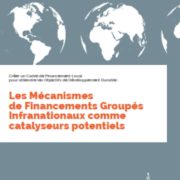
FMDV promotes the creation of subnational pooled financing mechanisms as innovative financial instruments for local governments to fund urban development and diversify their ressources. A first publication realized with AFD is now available

Presented during an official Side Event of the UN Summit Financing for Development in Addis Ababa, this Policy Paper on Subnational Pooled Financing Mechanisms is one of the solutions promoted by FMDV to diversify financial resources of Local Governments in emerging and developing countries.

This publication presents the different existing mechanisms, their benefits, the conditions of success and the recommendations to enable their development in emerging and developing contexts.

This first document will be followed by a general detailed report on these mechanisms and at the operational level by Study Tours to review existing experiences and programs allowing countries to support local authorities to organize initial pilot transactions based on this strategy, including South Africa, Mexico, Colombia and Peru.


World Summit on Climate and Territories

The UCLG Africa Secretary General participated in the World Summit on Climate and Territories held in Lyon, France, on 1st and 2 of July 2015, at the invitation of the Rhone-Alpes Region, as a milestone towards the COP21 in Paris in December 2015. The Summit was attended by over 800 participants from all regions of the world, representing subnational levels of local governments and civil society organizations.

The Summit was privileged to receive a keynote speech by the President of France, His Excellency Mr. Francois Hollande, who stated, “five months before COP 21 in Paris, the World Summit on Climate & Territories is an important step, a sign of collective will and of mobilization of the world’s territories”.

A series of workshops were organized around key topics like agriculture; mobility and transport; energy generation, distribution and consumption; education, mobilisation, awareness raising; climate finance.

Commitments and proposals were made by non-state actors and subnational and local leaders.

In a declaration released at the end of the summit, participants pledged to take on the “challenge” of keeping global temperatures below an increase of 2 degrees Celsius “by aligning their daily local and regional actions with the decarbonization of the world economy scenario”.

They warned that the “fight against climate change cannot be achieved without a truly local and subnational approach that takes into account economic, social, cultural and environmental realities.”


Call for Applications: Director for Eastern Africa Office (EARO)

United Cities and Local Governments of Africa – UCLG Africa is offering a position as Director for Eastern Africa Office (EARO). The Director for Eastern Africa Office will be in charge of managing all the aspects related to the activities of the Regional Office of UCLG Africa in eastern Africa.

Thus, candidates must justify at least 10 years of experience in leading position in the private or public sectors, with at least 5 years in a leading position. Having occupied a leading management positions in a local government or a local government association will be an advantage.

Potential candidates can find all the necessary information about the position, the responsibilities and the required skills and knowledge here.

Deadline for submitting the application is 14 July 2015 at 17h00 GMT.


Sustainability Week in South Africa: Forum of African Capital Cities for Sustainability

UCLG Africa Secretary General participated in the Forum of African Capital Cities for Sustainability at the invitation of Cllr Kgosientso Ramokgopa, Executive Mayor of Tshwane.

The Forum was also attended by over 20 African cities from outside South Africa, green economy practitioners as well as the academia.


At its official opening ceremony, the Forum had the privilege to receive a keynote speech by Her Excellence Dr. Nkosazana Dlamini Zuma, Chairperson of the African Union Commission. During the same opening, the Secretary General addressed the Forum around the topic of Enhancing cooperation among African cities, which you can read here.

The Forum resolved to establish itself as a platform of African cities dealing with sustainability issues that will meet on a yearly basis. The next year meeting being scheduled to take place still in the City of Tshwane. The Forum further resolved to put in place an African Urban Observatory Project, to be a shared instrument rallying the efforts of African Cities to monitor progress towards improving their sustainability in addressing the Sustainable Development Goals.

The Forum finally resolved that a meeting will be held in the framework of the Africities Summit scheduled from 29 November to 3 December 2015 in Johannesburg, South Africa, to put across the positions of African cities with regard to the discussions to be held at the COP21 meeting in Paris.


Commonwealth Local Government Conference

The Secretary General, UCLG Africa participated in the CLGF conference organized in Gaborone, Botswana, 16-19 June 2015, on Achieving the Vision on Local Government 2030. The opening ceremony was chaired by Honorable Botlogile M Tshireletso, Assistant Minister of Local Government and Rural Development; and followed by welcome remarks and addresses by Honorable Slumber Tsogwane, Minister  of Local Government and Rural Development, Botswana; Cllr Rev Mpho Moruakgomo, President, Botswana Association of Local Authorities; Mayor Lawrence Yule, CLGF Chairperson; HRH Prince Charles, Prince of Wales (by video). The Conference was also attended by Right Honorable Helen Clark, Administrator, and UNDP.

The official opening was marked by the  inaugural address by His Excellency Lieutenant General Seretse Khama Ian Khama, President of the Republic of Botswana, who recognized that local Government are central in the provision of basic services and key pillar in people centered development. He saw the CLGF conference in Gaborone as a platform to celebrate the progress of developmental local government that should be at the core of the effort being endeavored to localize and domesticate the effective implementation of the SDGs. He insisted on the need to define monitoring indicators for evaluating the realization of the SDGs, including at the local government level. He ended his address by declaring the conference open.

The inaugural address was followed by a Vote of Thanks by Honorable Teima Onorio, Vice President, Kiribati.

The CLGF Board Meeting took place just after the official opening.
The conference resumed its proceedings at 17:30 with the first plenary session presenting the conference overview and objectives of the conference. The first plenary received a special address by Right Honorable Helen Clark, Administrator, UNDP. In her address focusing on Local government: a principal partner in the post-2015 agenda, Rt Hon Helen Clark insisted on the fact that the new global agenda being discussed at the international community opens a new

The second plenary on 17 June chaired by Mayor Lawrence Yule, Chairperson, CLGF and President, Local Government New Zealand, discussed the topic of supporting democracy and good governance to ensure effective and capable local government. In his opening remarks, Dr. Carl Wright highlighted the role of local governments in shaping the new urban agenda, from the bottom-up approach, through localizing the SDGs, contrary to the top-down approach adopted for the MDGs. He insisted on the strategic partnership just signed with the European Union Commission that will help improve the 4 themes of the conference: 1. Local democracy and good governance; 2. Promoting economic growth and sustainable local development; 3. Inclusive, safe, resilient and sustainable cities and human settlements; 4. Local government 2030: challenges and opportunities for CLGF and its members.

Lucy Slack from Deputy Secretary General, CLGF presented the background paper to the conference, highlighting the urbanization context and the unique moment we are going through, when the international community is redefining the global agendas on financing for development, disaster risks management and protection, sustainable development goals, and climate change. She presented the key issues stemming from rapid urbanization and its impact on both urban and rural areas, and the importance of regular interaction between levels of governments, that of the national associations of local governments which are key to establish structured dialogue with pertinent stakeholders; and insisted on the need for political leadership of local governments with clear mandates and responsive local administrations; the importance of information and communication to build trust and collaboration with local communities. She also presented the paper on the role of local governments in promoting local economic development, through the provision of basic economic needs for business. Understanding the local economic environment is essential in achieving the SDG8.

The fundamentals to be observed include planning, adaptation to climate change, managing informal sector, creating an enabling environment for local economic development, including adaptation of procurement procedures favorable to local entrepreneurs, capacitating the business operators.
Charlie Berman, Chairman of Debt Capital Markets-Europe, Middle East and Africa, Barclays, insisted on sound and transparent financial platforms to boost the interventions of public as well as private sectors in local government.

Barclays is in operation for 350 years throughout the world, and has established last year the Barclays Africa Group. 43,000 of Barclays people work and live in Africa. This explains why Barclays sponsored this conference. Among the things Barclays can do is assisting in building good finance as a requisite good local governments. The establishment of a municipal Bond agency in many part of the world is a powerful mean to mobilizing capital on the municipal bond markets. Aggregated municipal borrowing is very important for local governments. Financing development will continue to be a challenge, but one should not forget that Africa has a demographic dividend that needs to be transformed into concrete possibilities. Barclays is ready to assist in transforming for the better, the lives of your communities.

Right Honorable Helen Clark, former Prime Minister of New Zealand and current Administrator, UNDP, gave a special address to the conference. She started by praising Botswana as a role model for the implementation of good governance at all levels, in particular at the local government level. The Kampala Declaration highlighted the role of developmental local governments.

2015 is a very important year for the definition of the global agendas.  A survey, which targeted 7 million people across the world, cited good governance, transparency and integrity as the 4th priority challenge facing the forthcoming sustainable development agenda.  Strong and well-resourced local governments are necessary for the implementation of the SDGs. The challenges that local governments face are: 1. decentralization policies with true devolution associated with necessary resources; 2. Financing, with a greater share of domestic resource mobilization, resource mobilization from the private sector particularly through investment funds, and access of local governments to development partners resources channeled through budget support; 3. Demographic change, with 60% of the population in Commonwealth countries under the age of 30.

Local governments should invest in youth to take advantage of the demographic dividend; 4. Urbanization, the pace of which is unprecedented in some of the world region like Africa. In such context, urban governance matters more than ever before; 5. Exclusion, in particular of women and marginalized groups.  Local governments should strive to be at the forefront in including the marginalized and excluded groups and form partnerships that will bring transformation prospects expected by local communities. Helen Clark presented a series of good examples of such partnerships in Tanzania, Bangladesh, and other countries, with the assistance of UNDP, UNCDF, and bilateral a partners such as DFID.

Local solutions and experience exchanges are key to addressing this huge challenge. South/South cooperation is a valuable mechanism to strengthening the capacity of local Authorities to manage this huge change. Building much resilience to disasters should also be among the priorities of local governments. Much more has to be done to building responsive local governments on disasters management. Adapting to climate change shall also be among the critical initiatives that local governments should consider embarking on aggressively. Finally, local governments should be involved in the localization of the SDGs. A toolkit has been developed to that effect.  UNDP and UNCDF are committed to empowering local governments in order that they take their share in the post 2015 agenda, including LED and integrated local governance. She concluded her statement saying that the place of local government in the new development agenda is fully recognized. We cannot do without local governments. The session ended with a token of appreciation to the Rt Honorable Helen Clark for her support to the local government community.

On day 2, on Wednesday 17 June, the second plenary focused on supporting democracy and good governance to ensure effective and capable local government. The second plenary was chaired by Hon Frans van der Westhuizen, Assistant Minister of Local Government and Rural Development, Botswana, and facilitated by Brazil Morrison, Chair, Local Government Commission, New Zealand.

Abdoulie Janneh, Executive Director, Mo Ibrahim Foundation delivered a keynote speech on the importance of local democracy and good governance. In his statement, he insisted on localization and territorialisation of the development agenda, and the adoption by the AU conference of Heads of State and Government of the African Charter on Decentralization, Local Governance and Local Development, as well as the creation of the High Council of Local Authorities within the AU institutions.

He also introduced the Ibrahim index of African governance (IIAG). Key findings of the 2014 index are: slight improvement of governance, but lower than 5 years ago; improvements stemming mainly on progress the implementation of human rights; dramatic deterioration in rule of law in some countries.
Jean Doret Ndongo, Deputy Minister of Decentralization and territorial affairs, delivered the message of Hon Isidore Gnonlonfon, Chair of the subcommittee on Decentralization and Local Governance, African Union, and also addressed the audience in his capacity as Head of the Camerronian delegation
Prof Adebayo Olukoshi, regional director for Africa, international institute for democracy and electoral assistance, drawn attention on the fact that in many respect, the democracy at national level depends largely on what happens at local level. The Africa inherited system of centralization that lead to personalization of power through presidentialism.

The record of performance of every day democracy in local government is characterized by huge corruption. This has created problem in the mindset of local populace on what this democracy is all about. If we are to look at the range of protest at local level, most of these are around poor service delivery. But this black painting can be balanced by good examples of quality local administration such as in Cape Verde, which has been instrumental to the development of a peaceful and inclusive environment that improved trust between people and government. He recommended a process of mutual assessment by local governments among themselves.

Hon Colin Fagan, Minister of State-Local Government and Community Development, Jamaica, stressed the role of consultation in the implementation effort of the SDGs
Cllr Greg Belz, Vice President, Australian Local Government Association, rated that Australia has 560 local councils. He presented the Australian support for local democracy.

Dr. Gloria Somolekae, Botswana’s candidate to the Board of UNESCO, stated that we are here because we are part of the global family to ensure that the SDGs to be successfully implemented. For that, we need strong and robust local institution. What steps is Botswana is taking in developing the decentralization policy. This is still in process.

The third plenary on promoting economic growth and sustainable local development was chaired by Cllr Rev Mpho, and started with a keynote speech by Dr. Stergomena Laurence Tax, Executive Secretary,SADC.

Hon Pravin Gordham, Minister of Cooperative Governance and Traditional Authorities, South Africa, went on presenting the role of local government in the economic domain in South Africa. He informed about the Agenda 2063 reference on integrated growth, championing a vision of an Africa where growth is people driven. But many factors need to be taken into account: 1. Growth and development are challenged by inequalities within and between countries, leaving behind many people; 2. New technological development is creating unintended side effect in less job creation while Africa is facing youth demographic bunge; 3. Instability of the financial system, in particular in Europe, put at risk any long term engagement relying on stability of the financial market; 4. The concentration of investments in a limited number of emerging markets raises the question of sustainable growth for all; 5. The quality of growth is also an issue given the unsustainable carbon dependent modes of production and overconsumption of non-renewable natural and other resources.

These issues have a huge impact on local governments and request them to embark in long term planning; regulation on the link between work place and living places; provision of infrastructure for essential services with attention on multi level governance cooperation through integrated planning and delivery; financing, where municipalities are compelled to raise their revenues from local rates and taxes; public employment using regeneration zones grants and development grants targeting economic zones. This requires a responsible and forward-looking leadership, which is crucial to creating a better environment for managing conflicts of interests better than done before. Overcoming poverty is not an act of charity, but an expression of a determined will.

The panel discussion that followed was moderated by Mmasekgoa Masire-Mwamba, former deputy Secretary General, Commonwealth Secretariat. It had as panelists, Mayor Darell Bradley, Mayor, Belize City; Dr. Ab Rahman Awang, Director General, Department of Local Government, Ministry of Urban Wellbeing, Housing and Local Government, Malaysia; Cllr Nick Small, Local Government Association for England and Wales. After the panelists’ intervention, UNDP representative, informed that, a LED will be held in Turin in October, organized with the participation of ILO. She called for a strong representation of CLGF members.

On his part, Dr. Sutcliffe said that this was a good momentum for municipalities to intervene in LED. Many national states start recognizing the importance of local Government involvement in LED. To the extent that a full UN Conference will be held around LED in Turin in October 2015. Local governments need to be hands on about the value chain approach to their local economy.
Minister Gordham insisted on the need to go back to the basics by elaborating concrete indicators for LED and define actual doables. Human capital and its orientation is key, the geography of development as well.


But what matters is what will lift up the living conditions of all. The fourth panel was held on inclusive, safe, resilient and sustainable cities and human settlements. The panel was chaired by Cllr Philip McPhee, CLGF Vice Chairperson.

Dr. Aisa Kirabi Kacyira, Deputy Executive Director, UN Habitat, delivered a keynote address on Post 2015 Agenda and Habitat III, towards a new urban agenda. Local authorities are at the forefront of the management of the urban challenge. Cities are the places where the battle of sustainable development will be won or lost. Why so? The first reason is that many global problems are rooted in cities and towns, including impact of disasters, and climate change. The second reason is that the majority of people on earth will be living in cities. This is a huge change in the pattern of settlement and development, with tremendous changes in terms of consumption, social, cultural, political and institutional terms. The world will be living urbanization goes hand in hand with development, and that the Emilia Saiz from deputy secretary, UCLG, facilitator of the panel, said the SDGs are of interest for local governments. There seems to be a growing understanding that many the responsibilities to make development happen are in the hands of adequately resourced local governments. Everybody talks about cities but we are not recognized yet.

Cllr Raymond Louie, President of the FCM, said the topic on agenda is at the core of FCM mandate and of its 2000 members, since 1901.

Jean Pierre Elong Mbassi, Secretary General, UCLG Africa, confirmed that local governments have come a long way since the ’90s. He reminded of the progress made since Habitat II Conference in 1996 in Istanbul, Turkey, during which the first ever world assembly of cities and local authorities was organized. He acknowledged the adoption of Rule 62 of the UN Habitat governing Council allowing local governments to interact with UN agencies, through UN Habitat. He further recognize the setting up of the UN advisory committee for local authorities (UNACLA) and that of the Global Task Force of local governments at the UN Secretariat as undisputable headways.

However, he pointed out a series of setbacks that are leading to optimistic perspectives: (i) the fact that at the Habitat III Conference Prepcom 2 in Nairobi, rules of procedures did not explicitly provide for the participation of local governments into the debates; (ii) the total ignorance of local governments in the upcoming UN Addis Ababa conference on financing for development (July 2015), where civil society organizations and the business sector were  given a slot in the official program, and not local governments; (iii) the difficulty for local governments to have their voice heard in the climate change negotiations at COP21 in Paris, despite the fact that most of the people recognize that adaptation to climate change and mitigation of its impacts will only be efficient if addressed primarily at the local level; (iv) despite the strong advocacy campaign championed by local governments to shift attention from exclusively sector approach to a more territorial approach to the development, highlighting more consideration for local governments as key actors in the management of the urban agenda, there still remain the feeling that cities and human settlements are sectors of development the same way as education, health, or transport.

Hence, our call to approach cities not with a sector lenses, but with an actor lenses, thus recognizing local governments as the closest public face in the management of cities, therefore an unavoidable frontline in addressing the urban challenge. This perspective is yet to be fully adopted and endorsed. In his statement at the conference yesterday, the deputy minister of local government of Cameroon said that within the CLGF family, there is a shared understanding that after all, every business is local.


Mr. Elong Mbassi formulated the hope that the Cameroonian minister will be the mouthpiece of local governments to convince its colleagues to approach the local governance as true partners in public governance, and to include them in the official country delegations to the upcoming conferences in Addis, Paris and Quito.

The fifth plenary was on the celebration of the 20th anniversary of CLGF, and received testimonies by Christopher Iga, CLGF Chair 1995-1999; Jacques Jobin, CLGF interim Chair 1995; Basil Morrison, CLGF Chair 2007-2009; and Peter Wood, CLGF Board Member 1995-2005.

The closing ceremony on Friday 19 June, chaired by Hon Slumber Tsogwane, Minister of Local Government and Rural Development, Botswana, first received a special address by Dr. Josephine Ojiambo, Commonwealth Deputy Secretary General on behalf HE Kamalesh Sharma, and Commonwealth Secretary General. In her address, she insisted that Commonwealth is resolved not to leave anyone behind in the SDGs agenda. The Commonwealth secretariat is keen to accelerate the implementation of the SDGs, and is open to include local governments within the commonwealth delegations at the international UN conferences. Commonwealth will intervene in areas where impact on the improvement of the living conditions of citizen will be maximum. Among those is crowdfunding, for which a toolkit was developed by Commonwealth secretariat.

Prime Minister, Malta, Hon Dr. Joseph Muscat presented the CHOGM 2015 to be hosted in Mascate, Malta, around the theme Adding global value. He said that we need to admit that Commonwealth is sick, and needs to take action to improve on the situation and better social economic foundation for peace and prosperity. It is imperative that local governments ensure social justice to the citizen, and Malta support the subsidiarity principle of multi-level government approach. CLGF can play an important role here, through capacity building and exchange of local good experiences. The 53 Commonwealth diverse member countries can bring a lot into the international debates on global agendas on sustainable development, finance, or climate change. Malta has the highest economic performance in the European Union. This is due to the role of women, science, and universal free health care. Malta wants to share this experience and the challenges faced by small states, and to that effect will soon host the center of excellence for the Commonwealth small states. Small land states are small in terms of their land, but are big sea states, which make them the heart of the Blue economy. The blue economy includes trade-shipping routes, access to fishery, and protection of sea environment.

The blue economy connects the world for the better. Hence his plea that the world should be paying more attention to these small island countries.

In his closing remarks, His Honor Mokgweetsi Eric K Masisi, Vice President, Republic of Botswana, praised the diversity and high-level participation in the Gaborone CLGF Conference. He commended the CLGF family for the work well done for over 20 years. He welcomed the Gaborone Declaration on local government vision 2030, and its insistence on the need for efficient implementation measures, that constitutes the essence of transformation shift embedded in the SDGs. He reiterated the importance of the finance for development conference scheduled in July 2015 in Addis Ababa, as a key milestone in this structural transformation shift. The strengthening of the partnership spirit should be at the core of Commonwealth and CLGF action. He insisted on the role of BALA in steering the role of local governments in the implementation of the SDGs in Botswana. He further promised that the Botswana government will seek the endorsement of the Gaborone Declaration at the coming CHOGM in Malta. He then declare the conference close at 11:30.


UCLG World Executive Bureau Meeting Committee on Statutory Affairs

UCLG Africa Secretary General participated in the meeting of the Committee on statutory affairs, as part of the proceedings of the UCLG Executive Bureau, in Porto Alegre, on 10 June 2015, from 12:00 to 13:30.

The meeting first adopted the report of the Committee on statutory affairs that met in Haiku, China. The meeting also discussed progress of strengthening the UCLG networks and sections launched with the organization of the first UCLG Retreat in Barcelona, in February 2015.


The retreat insisted on the need:


1. To increase and consolidate membership; 2. To find a balance between the advocacy role and concrete service provision with direct added value for the members; 3. To ensure continued Political involvement and leadership; to engage in the work of the committees and working groups, in particular the following ones which work is key for the preparation of the Habitat III Conference: urban and territorial governance; financing urbanization; local economic development; urban planning; inclusive cities and territories; environmental sustainability; culture; local government’s role in development and decentralization; 4. To grow the UCLG as the Learning Network through exchange of knowledge and experiences through social networks; through the development of communities of practice; through decentralized cooperation and peer-to-peer action learning.


These orientations were translated into key actions with dedicated budget lines. It was felt important to reinforce the political representation of mayors in UCLG meetings. In conclusion, the Secretary General proposed that bilateral meetings should be held between the secretariat and the regional sections.


On the item on the renewal of the UCLG governing bodies in 2016, a calendar has been proposed as follows:


By October 2015: the chair of the Committee on statutory affairs sends out letters to sections informing them of the calendar, the sections will be requested to provide a detailed overview of how elections will be organized in their region, including meeting dates.


December 2015, on the occasion of the World Council in Paris: the Committee on statutory affairs will discuss any relevant issues related to the electoral process, and will agree upon the launch of the call for candidatures for the Presidency, and report to the Executive Bureau accordingly.


January 2016: the UCLG sections launch the electoral process and the secretariat will launch the call for candidatures for the Presidency, in accordance with the rules agreed by the Committee on statutory affairs.


May/June 2016, on the occasion of the UCLG Executive Bureau: the Committee on statutory affairs receives the initial nominations from sections, and receives candidatures for the Presidency and Treasurer.


September 2016: an extraordinary meeting of the Committee on statutory affairs will consider the nominations presented in terms of balanced representation; the Committee on statutory affairs will consider if the candidatures for the Presidency meet the agreed criteria.


October 2016, during the UCLG World Congress: the Committee on statutory affairs Will propose a process of appointment and election through reports to the Assembly and Council; the General Assembly will appoint the representatives of the World Council; the World Council will appoint the representatives of the Executive Bureau; the World Council will elect the Presidency.


The Committee on statutory affairs addressed the organization of the second World assembly of local and regional governments in the framework of the Habitat III Conference in Quito, Ecuador, as a follow up to the first World assembly of cities and local authorities (WACLA) that took place in 1996 in Istanbul during Habitat II. The registration will be open to all local and regional governments that register through one of the international networks that form part of the Global Taskforce. The assembly will agree upon key messages and select speakers to present the outputs to the Habitat III Committees and forums.


The Committee further addressed the membership requests. The issue of the Ukrainian association of district and regional councils which apparently chose to be member of CEMR. This fact is questioned by the Eurasia section who asked that there is a need for an open consultation with Ukraine in presence of all the protagonists. The committee received the candidature of the city of Kazan that wishes to host the next UCLG World Executive Bureau.


After the Committee on Statutory Affairs, a meeting of Latin America local Authorities held a meeting under the co-chair of Mayor Topbas, UCLG President and Mr. Fortunati, Mayor of Porto Alegre.


Mayor Topbas recalled that Latin America is an important player for Habitat III, since the City of Quito will be hosting this conference. Of course the decentralization process is now being reversed in many countries, and our aim is to keep the message of decentralization having buy-in. We need a convincing narrative on the common solution to tackle the increasingly urbanizing world, where local governments have to play a critical role. It is important to have a solid basis, in particular in Latin America. The aim of the meeting is linked to the raison d’être of the UCLG. The agenda ahead of us will have impact over 20 years, and we need to be together to come up with solutions for peace and prosperity. Local governments need to provide sustainable solutions for local population, this is why there is need for cooperation across local governments networks. Mayor Topbas further explain that there is need for a stronger UCLG network, in order that the voice of local governments has impact on the post 2015 development agenda. He underlined that Latin America is key for the global organization, and trust that the Latin America colleagues are conscious of their role in the year ahead.


Deputy Mayor of Sao Paolo started by congratulating the participants on behalf of Mayor Fortunati. It is stimulating to know that Latin America is the most urbanized region in the world. Fighting inequality is an imperative in cities like Sao Paolo, with a lot of challenges such as housing finance, access to land and secure tenure, master planning, and the relation between housing and employment.

The issue of housing is not the only one. There is need to address as well the issue of transport. Focus should be focusing on public transport and the use of bicycle. Sao Paolo initiated the Mercosur colloquium to define a new political agenda for our Metropolis, joined by Mexico, Santiago de Chile; Bogotá, Colombia. The outcomes of the colloquiums will contribute to the definition of the new urban agenda, and in particular the inputs to the regional report for Latin America. She extended an invitation to the 20th Summit of the Mercosur to be held in September in Sao Paolo.


The Mayor of Montevideo insisted on the right for the city. Since most of South American inhabitants live in cities, it is necessary that the living conditions of everyone be the concern of the city leaders. The agenda to build for Habitat III should be related to the sustainability of our cities, tackling the conflict of interests in the cities manifested mostly in environmental issues.

The issue of financing should be also addressed to give an answer to the spatial segregation. We have in our cities, we need that Habitat III gives insights to address these issues and define priorities of interventions to better the lives of city dwellers. UCLG is a good conduit to voice this case at the international level.


Mayor of Canoas, Brazil, insisted on the fact that new challenges are brought about by choices made by leaders of city and national Governments. Many Mayors wish to have the right to the city, and Porto  Alegre is the place which saw the birth of the World social forum and participatory budgeting. We wish that Porto Alegre be the kick off place for the City of the future and the future of the cities, and that of the city of rights and the rights for the cities, and the right for the City for all.

The representative of the Brazilian Presidency said that Brazil is coordinating FCCR and the Mercosur Summit. Latin America is determined to fighting inequality and Uruguay is showing the way on this front.


Presidency of Brazil support the initiatives of local governments coming together at the Latin America level. The Brazilian government will defend the strengthening of cities, including their participation at the Habitat III Conference. Brazil is careful to respect the sensitiveness of partners. The national confederation of Brazilian cities recognized the role of city government in the upcoming Habitat III Conference. The proper integration of city perspective is key to the success of the Conference.


There is a need to include small and medium size cities in this perspective. There is also a need for a integrated vision of rural and urban areas to establish a balance in territories. It is also very relevant to increase exchange experiences between cities in the region and throughout the world.


Representative of Bogotá began the dialogue on priorities of cities in Latin America by saying that local authorities should be aware of the reality of inequalities and most cities and should reflect on how they should be facing this daunting issue.  The response right response to act through UCLG. The UCLG should be facilitating the conclusion of partnerships with civil society organizations and the communities for local governments to making progress on rights and democracy; and with national governments to facilitate the building of an enabling environment for cities and local governments, and financial schemes which are compatible with the responsibilities devoted to local authorities.

Another priorities for which partnership is necessary with the private sector to addressing unemployment and job creation.

There should not be any competition in terms of representation. In the international scenario, cities need to work with the UN in their own right, through their world organization, UCLG, and its regional sections. Latin America is determined to work towards a common voice, because of the responsibility that the region bears in this year and next year’s international agendas such as  the international conventions on Climate Change (Bogotá, September 2016), 5th  UCLG world congress (Bogotá, October 2016), and Habitat III (Quito, October 2016). Cities need to prepare their political representation through a single Latin America voice representing all the Latin America local authorities networks.


The Representative of Quito first presented apologies from the Mayor who could not make it to the

Porto Alegre World Executive Bureau. Latin America as the most urbanized part of the world, is prepared to play its part in the success of the Habitat III conference, and wants to get in the upcoming meetings united. The UCLG-A should work towards the definition of what the urban agenda will look like in the coming 20 years. There is need to better coordinate actions in order to create synergies of efforts. UCLG is the coordination mechanism that will help fix the participation of the mayors at the second world assembly of local and regional authorities. Local governments in each country need to be in the official representation of their countries.


The representative of Porto Alegre wished that the discussion be in clear sync with the communities, as  private interests are more and more taking over public interest. The demand and problems are with local government, the money is always with the central government. This should also be at the heart of our debate. In his concluding remarks, Mayor Topbas thanked the participants for the frankness of the dialogue, recognizing the value of acting collectively. The overall aim is eliminating poverty, fighting child abuse, addressing mass transportation problem, defining urban identity and inclusiveness. We need to unite our forces to be influential at the UN, in face of our governments, and have impact on the other stakeholders. Never forget that we represent people that expect a lot from us as city leaders. Only through building international platforms of local governments would we allow local people to influence the global agenda and inspire its definition.


On 11 June 2015, the UCLG World Executive Bureau met under the leadership of Mayor Kadir Topbas, President of UCLG, in presence of Mayor Fortunati, from host city, Porto Alegre, Brazil, and all members of the World Executive Bureau.


In his opening remarks, Mayor Topbas said we are here talking about the future of humanity. This meeting will lead us in new horizons, since Latin America will host Habitat III, in the framework of which the second world assembly of cities and regional authorities will be held. It is also in Bogota, Colombia, that the UCLG will be holding its 4th World Congress, where a new leadership of the organization with a new president will be elected. The UCLG president has been invited to be one of the 26 Panelists to advise the UN secretary general on the post 2015 development agenda, among which the definition of a new urban agenda in a moment when the world is entering in a new urban age. The climate change is also on the agenda and the COP 21 in Paris, in December 2015,  another challenge for cities and local authorities.


UCLG has been recognized as a global ally for the UN by the UN secretary general and members approved the creation of the Global Task Force by UCLG to facilitate interaction between local authorities and the UN system. The UCLG also used UNACLA to convey the UCLG concerns and messages to the U through UN Habitat.

Confucius said it is difficult to resolve important problems from a long distance. Therefore proximity is key in finding suitable and sustainable solutions. Among key issues local Authorities should prioritize are financing local governments, addressing the migration issue, encouraging the participation of citizen in local development and democracy, empowering women in local governments, promoting the right to the city for all.


Local governments need to stress that they are solution providers, and not problems makers. But this message will be conveyed only if local governments are prepared and united. We need to share the same feeling about the future of the world. That is why UCLG organized in February 2015 a Retreat with other stakeholders to work on the narrative and controversies about the performances and impact of UCLG interventions and actions. Mayor Topbas ended its address by wishing every success to this World Executive Bureau.


After the President remarks, the panel session was open on the new urban agenda: priorities, cooperation and learning, strategic alliances.

Under the session 1 of the panel Mr. Enzo Lavolta, deputy Mayor of Turin, said that cities are at the frontline in addressing global issues. The main alternative IS to strengthen autonomy of local Authorities. The goal in front of us for the next year is an ambitious one, going far beyond politics. Local representatives should give the communities the responsibilities they have to be able to achieve this goal. In Turin a forum will be organized with the communities to talk about the environment and mobility in the City. We need daily response from the community so that there is collective response in a stronger way.

Mr Jorge Enrique Rojas, secretary for social integration, City of Bogotá, stated that cities are a huge responsibility in addressing consumption issues. They need to share their reflections through decentralized international cooperation, to respond to territorial needs and human experiences. Mayors are agents of change, and they are not there to act as civil society organizations.


Local governments are public authorities embedded in the democratic processes. They are the custodians of citizenship and respect to human rights in the cities. Mr Elkin Velasquez, UN Habitat regional Director for Latin America, said that the Golbal Task Force showed what role the UCLG can play in the global debate. It is the merit of UCLG to have  set up the global task force. There is a space for local authorities in the Habitat III processes. There are other events where the voice of mayors can be heard, for example the production of regional reports for Habitat IIII. Regarding the influence of local authorities, they should understand that they are the ones feeding this new urban agenda, and Porto Alegre IS an example for this.


Ms. Ines Maghalhaes, National Secretary of housing, said that Brazil is ready to deepen the governance of the international mechanisms by allowing the local authorities to participate in the debate at the international agenda setting. Brazil is prepared to support the presence of local authorities around the table of negotiations in the post 2015 agenda and the new urban agenda, and the Climate change agenda. Mechanisms should be established on content and forms.


There is an ongoing debate in Brazil on the need for effective participation in the building and implementation of the Habitat III agenda. Debating on the relevance of local and national governance is not an issue. There is need for a cooperative and collaborative public governance Debate President of REFELA How to overcome social segregation? Mayor of Xaixai, Mozambique raised concerns about the big companies imposing rules of the the game over poor cities. What can be done to mitigate that risk?


The UCLG-A secretary put three questions:


1) How to reconcile the search for competitiveness and the need for inclusiveness?

2) Following which logic will we be defining priorities in our cities: the logic of the market, or the Logic of public regulation, or How to combine the two logics to have a balanced approach in the definition of priorities?

3) We declare that cities are engine of growth: but whose growth, and whose cities?


Mayor Oualalou of the city of Rabat, Morocco, said we need to address 3 main requirements:

1) Be vocal in the three global conferences around the corner, namely, the Finance for Development Conference in Addis Ababa, Ethiopia, in July 2015; the COP21 in Paris, France, in December 2015; and the Habitat III Conference in Quito, Ecuador, in October 2016.

2) The world is now emerging from a deep crisis, which have had a lot of impacts on cities. This way out of the crisis opens new opportunities for cities, taking into account the need to provide innovative solutions and approaches, including in the domain of decentralized cooperation.

3) Local authorities should endeavor to fighting instability and addressing the consequences of State crisis in failing States, in particular in the Southern board of the Mediterranean sea, and to taking their part in the management of migrations generated by this situation. Local Authorities should be at the frontline in finding and implementing new appropriate and innovative solutions to these three requirements.


The debate then focused on a policy debate on resilience with the following panelists:Mr Marcio Lacerda, Mayor of Belo Horizonte, President of the Federation of Brazilan Mayors Mr. Glademir Aroldi, Vice President of National Confederation of Municipalities of Brazil Mr Ernesto Daniel Chambisse, Mayor of Xai Xai Mr Michael Berkowitz, President of 100 Resilient cities, Rockefeller Foundation The panel discussed the issue of representation in a context of expansion of the use of social media.

There is a big discredit of the political parties, and this is happening in the same moment that local authorities is working on the improvement of efficiency and performance in participatory governance. Instead of open meetings and boards including all stakeholders, there is still a lot of distrust in local democracy processes. It is no longer to recentralize the decision making, but despite this, the issue of building trust between government and the people is still pending. To overcome this mistrust, public authorities should be working in coalitions at all level of governance, and building win-win alliances with the other stakeholders. The implementation of the subsidiarity principle gives the community the social control on cities initiatives. The way citizen exercise control on the leaders is an important way forward.


The model of decentralization and territorial development should be improved, taking advantage on the most privileged situation like Brazil. In the case of Argentina, it is important to define who is responsible of what? The development of cities was based on competitively, and the model is now changing towards integration and complementarity. This is a new world where cities should be cooperating and not isolated. Cities have more power when they are part of powerful networks of cities. We should rethink the concept of habitat, beyond responding to basic needs. Liverpool asked what to do about capturing the enormous experience encapsulated in the experience gathered within the UCLG network.


The cooperation between Mozambican and Brazilian citizen is based on the way to bring people closer. We need public policies that improve People’s lives. Failing to do that raises mistrust between Political leaders and the citizen. Célestine Keutcha confirmed that the local authorities are the doctors of development. We need to strengthen cooperation including around the gender issue, as the case between Brazilian and Mozambican mayors.


The vice president of BALA insisted on the cooperation between neighboring countries in terms of provision services and autonomy of local authorities for benchmark purposes and replication of approaches.

The City of Dyiarbakir, Turkey, insisted on the autonomy of local government that gives meaning to cooperation. The best cooperation is to share knowledge in particular in rights to housing and building social housing and financial support to poor City dwellers so that they can access housing. Should we prioritize use of housing or property rights. In term of right to housing, gender inequality is the rule. What can be done to curve this situation in social housing policies?


Mayors of Chile stated that the important unity before us is the evaluation of the MDGs that showed that all stakeholders did not participate. This opens a new avenue for new stakeholders such as local Authorities to be involved. This requests that local authorities associate themselves with the SDG and the Habitat III processes with new perspectives.


Mayor of Inhambane, Mozambique, said that there is ongoing cooperation between the city of Porto Alegre and the city of Inhambane on participatory budgeting and Cadaster, land registration, and urban planning. This has been very fruitful for the city of Inhambane. Mayor of Xai Xai insisted on the need to work together, guided by the common good of the community. Mayor of Belo Horizonte picked up the issue of gender as key in the local policies, including access of housing for women and local rent. There is need that a permanent network is established to exchange on these issues.


The Executive Bureau continued its proceedings in the afternoon with the adoption of key decisions concerning:

1. The adoption of the report of the Executive Bureau meeting in Haiku, China, on 23 to 26 November 2014.

2. The preparation of the second world assembly of local and regional governments towards Habitat III, and the outcomes of Habitat III Prepcom 2 in Nairobi in April 2015.

3. The participation of UCLG in the post 2015 Summit in New York, in September 2015 4. The participation of local governments in COP21 in Paris, in December2015

5. The reports on the risk prevention and disaster responsiveness in Sendai, South Korea; on the world water forum in Daegu-Gyeongbuk, South Korea; on the UCLG culture Summit in Bilbao, Spain; and the Guangzhou Award on UCLG community on urban innovation.


The Mayor of Porto Alegre presented a statement for the unity of Latin America networks of local authorities, and asked that UCLG recognizes the dialogue mechanism being set up and supports the Latin America local authorities unification process.


This reengagement of Latin America in the dynamic of unity is welcome by UCLG members.

FLACMA sent a letter recognizing the need for the unification process and its openness to work towards emphasizing of all local authorities, big and small, as well as with the associations. FLACMA is for dialogue to improve the unification process. The UCLG-A Secretary General commended the unique effort for the unification process they arrived at.


The representative of Chile asked that the UCLG-A secretary general be part of the working group put in place by the UCLG on the unification process of the Latin America local authorities. Mayor Fortunati finally reported on the last meeting of Metroplolis in Porto Alegre, and the next meeting of Metropolis will be held in 2017 in Montreal, Canada.


The meeting also included a series of side meetings scheduled on 12 June2015 among which, the meeting of the task force on local government disaster response; the committee on development on cooperation and City diplomacy, a briefing meeting on the consultations of the local and regional government’s agenda for the 21st century; the committee on peripheral cities; the committee on digital and knowledge-based cities; committee on social inclusion, participatory democracy and human rights; and the committee on urban strategic planning.


The meeting was concluded with the presentation of Bogotá, Colombia, the host City of the 5th congress of UCLG from 12 to 15 October 2016.