 The meeting of the Presidency was hosted by the Mayor of Barcelona at the City Hall and chaired by UCLG President, Mr. Kadir Topbas, Mayor of Istanbul.
The agenda of the meeting included the UCLG Work Plan for the year 2015, the identification of key strategic issues in preparation of COP21 and Habitat III, and of key milestones for 2015.
The UCLG President reported about the statement he made at the UN conference held in New York earlier this week on the implementation of the Post 2015 Agenda, where he pledged for the key role of local and regional authorities in addressing the implementation of any global agenda if it has to have impact on people on the ground. He reiterated his thanks for their participation in the retreat to the regional sections and committees and working groups, and acknowledged the fact that this strategic reflection will help UCLG become an efficient network of networks of local authorities. He confirmed the need to develop a proactive approach to the global agenda. Making reference to the butterfly effect, he stated that any small initiative in the right direction at the local level can have enormous impact across the world. He expressed the hope that every single local authority under this roof of UCLG is mobilized and is at the fore front to showcase the cornerstone role of the local authorities in keeping up to the people expectations. UCLG members should be part of the citizen to be able to succeed to deliver on their mandate.
The UCLG secretary general then summarized the outcomes of the retreat. The meeting started with regional sections focusing attention on exchange of information in order to created a sense of collaboration and working together. On the second and third days, the meeting was enlarged to the 19 committees and working groups, and endeavoured to align the agendas of the committees and working groups with the ones of the regional sections. It was agreed that through this alignment there be a distinction between standing committees working within the core of the UCLG global agenda, and the other committees and working groups that are the expression of the free engagement of the members. Standing committees should be more supported since they are feeding into the core agenda of the UCLG, and the other committees and working groups that are more voluntary can continue their work at their own initiatives. It was also suggested that the world secretariat should be listening more to the regional sections. The UCLG should be seen as a knowledge sharing and learning platform. This calls for exchanges on tools to facilitate coherence. The third day external partners were invited to share their thoughts on the UCLG Agenda, developing narratives and cou ter-narrative on the way UCLG and its members are perceived by the different constituencies at local, national, continental, and global levels. This gave room to a very mind opening debate.
Then the meeting went discussed the main lines of the UCLG strategy which is being enhanced by the operating grant. On international relations and advocacy, the change that occurred was the setting up of the Global Task Force as the local authorities’ single voice on the international table. The agenda of the year is full of events for which the presence of political leadership of UCLG is expected. A appeal was therefore addressed to the regional sections and the committees to provide names of members willing to take part in the various global encounters planned during the year 2015.
The second line of activity was about intelligence and content creation to bring local and regional authorities own ideas on the table. There is need to attract attention with short papers prepared by serious work on the issues being adressed. There is also need to put a focus on the innovative approaches championned by local and regional authorities such as are the territorial approach to the development, fiscal transition and decentralization, intermediary cities, urban/rural linkages.
The third line of activities was about strengthening the network and collaborative work. The UCLG should find and build champions that will support the network. There is need to define a virtual map connection, and improve on communication and collaboration. There is also need for some social network platform to collaborate better, and to spare more time on members calendar for exchange of information and experiences and peer learning. There is need also for UCLG to reinforce its campaign aiming at attracting new members through the implementation of value added activities.
During the debate that followed the two introductifs remarks by both the UCLG President and Secretary General:
The UCLG regional section for Africa insisted on the need to align the agenda of the UCLG and the agendas of the sections. For example the dates of the world council clashes with that of the Africities Summit in December. He also asked for clarity on the preparation and organization of the second world assembly of cities and local authorities to be held in the framework of the Habitat III Conference.
The City of Paris recognized the usefulness to have African mayors both at the UCLG World Council and to the Climate Forum of Mayors hosted by the Mayor of Paris. Arrangements will be made to ensure that the Africities dates do not clash with the world council and the summit of mayors on climate.
ASPAC secretary raised the issue of the status of UNACLA.
MEWA secretary called for the renewal of the retreat and asked that the world secretariat and other regional sections leadership and secretariat attend to each other governing bodies meetings. One way of facilitating this is to have regional activity reports published by UCLG.
Metropolis insisted on the necessity to make sure that a second world assembly of local authorities is not mixed up with a common meeting with the other major groups in the framework of the Habitat III.
CEMR confirmed that UCLG has matured in recent years, with the recognition it has gained at the UN, but also with the strategic partnership just concluded with the EU. UCLG is now a unified family despite its diversity, and is more and more respected by outsiders. But enormous challenges are still ahead. Even if decentralization is gaining momentum, many national governments are still relunctant to see local authorities as part of the solutions in addressing the global challenges and agendas.
The Mayor of the City of Rabat, UCLG Treasurer felt that the retreat organized this week in Barcelona has been very useful and has fostered UCLG to improve its working capacity. 2015 is a crucial year, when the international community is going to take stock of the lessons of the past agendas and define the way forward with the definition of the sustainable development goals (SDGs). The first global meeting on financing for development scheduled in July 2015 in Addis Ababa is crucial, and UCLG should make sure to have a say on this issue. The second global meeting is the post 2015 meeting in New York, where UCLG should strive to keep the Sustainable cities among the Sustainable development goals that will be finally retained. The third meeting is the COP21 in Paris on climate change. It is critical that the global task force put in place under the leadership of UCLG shows a common front so that the voice of local authorities is loud and heard even if so far it is hardly listened to by national governments in an issue which solution is to be found at the local level. The fourth meeting is HABITAT III in Quito in October 2016, and is addressing the core business of local authorities, housing and cities. UCLG should make sure that when addressing urbanization, the international community does not sideline geopolitical issues, the territorial imbalances, lack of political and economical justice. Cities around the World are highly impacted by globalization and its consequences The Mayor has to manage these consequences in a very constrainsted environment
The North American section complimented the President for progress made by UCLG at the UN. The sentiment is that the retreat was very successful and contributed to the maturity of the UCLG. But the organization needs also to grow on financial issues, grow its membership by emphasizing on the value one can get from membership of UCLG, and this can be different in different regions.
The UCLG VP for Africa started by thanking the President and the world secretariat and regional
sections. Advocacy and networking and building alliances are very important. He requested to look at the possibility for the Global Task Force to meet in Gaborone, Botswana, in June, taking advantage of the CLGF meeting in Gaborone 15-18 June 2015, where Elen Clark from UNDP will be attending, with Heads of state of Ghana, Uganda, Tafuru, Malta, as well as a good number of ministers, to push any pending issues. This would also offer the opportunity to meet with minister of Foreign Affairs of Botswana that wil be chairing the SADC Region from August 2015 onwards.
Co-President Mayor of Kazan praised the UCLG President for the headways made by the organization. Cities paying attention to international affairs are also those who are developing most because of their openess. That is why the Eurasia section of UCLG is proposing to launch a ranking of the Eurosia cities openess to international activities. He therefore asked the members to support this initiative. He offered to host the 2016 world executive bureau in Kazan.
ORU FOGAR requested that greater attention be paid to territories. This concept is important now and here because localizing the agenda will be key for the people where they live, going beyond the statistics of improvement. There is need to recourse to the concept of rebalancing the regions and the territories.
The City of Quito asked the secretariat to define landmark meetings where efforts should be put since mayors cannot afford so many meetings as presented in the 2015 agenda of meetings. He confirmed the availability of Quito to accommodate the second assembly of Mayors within the Habitat III Conference, and make it possible for UCLG to have a slot in the main conference.
Flacma, the Latin America section of UCLG encouraged members to attend the executive bureau in Porto Alegre. He commented positively on the retreat and its insistance on the bottom up approach. He echoed the non sustainable reality of majority of people living in cities. He supported the need for the sections to be backed the world level to strengthen the capacities of the UCLG network. He promised that the Latin American representation will be enhanced in future activities of UCLG.
UCLG ASPAC co-president thanked the world secretariat and the regional secretariats for attending the second Guangzhou Awards on urban innovation for 2014.
UCLG ASPAC Vice President, City of Jeju, was impressed by the wonderful meeting. Jeju will attend UCLG culture Summit and is prepared to support cultural and environmental projects.
City of Montréal informed of its commitment to supporting enlargement of membership in North America.
On UNACLA the UCLG secretary general said that the issue is on the table and that a meeting is scheduled in April 2015. UCLG does not want to go backwards and is trying to improve the role of local authorities at the UN also through UNACLA. He also informed that the second world assembly of Mayors will be held in Quito back to back with UCLG congress in Bogota.
At his conclusing remarks, the Mayor of Barcelona confirmed that the future of the world lies in cities, this is why the cities shall unite and strengthen cooperative links within cities. Barcelona has a Metropolitan area of 3.5 millions people and wants to be seen as a City of culture and cooperation in an era where new technologies can open up to new opportunities for development and democracy. The major challenges ahead for UCLG is to see how cities will contribute to closing the gap between the have and the have not.
The meeting was close by the UCLG President at 13:30.


 On March 15, 2015, the United Nations Secretary General, Ban Ki-moon, paid tribute to a group of officials striving to reduce risks of natural disasters.
 The date of the 7th edition of Africities Summit, taking place in Johannesburg, South Africa was modified. In fact, the Executive Committee of Africities has decided to hold the Summit two days in advance of the initial date.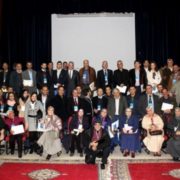
 The city of Nador hosted, Thursday 6 March 2015, the Territorial Coaching Forum of the Oriental Region of Morocco that was officially launched on November in Oujda.
 The programme manager, Charles Patsika, participated in a Round-Table Discussion hosted by the Uongozi Institute in Dar es Salaam, Tanzania on 19 and 20 February 2015.
 Samori Media Connection Group, “Notre Afrik” Magazine editor, leader of Panafrican press in Belgium, announces the opening of registration for the second edition of the Rebranding Africa Forum (RAF), which will take place on the 16th, 17th and 18th October, 2015 around the theme “Investing in Africa, Enterprising for Africa”.
 The inaugural 2015 “José Eduardo dos Santos African Mayor Awards”, created by the UCLG Africa, has been launched. The awards ceremony will take place on the 29 and 30 April 2015 in Luanda, Angola.
 On 27 February 205, the UCLG Africa secretary general participated in a function at the Ministry of Foreign Affairs, Kingdom of Morocco, for the celebration of the Woman’s International Day at the invitation of Ms Mbarka Bouaida, Deputy Minister at the Ministry of Foreign Affairs and Cooperation, Kingdom of Morocco.
 The Pan African organization of local government United Cities and Local Governments of Africa (UCLG Africa) is calling on experts in various disciplines to register in order to fulfil the following purposes:

 On January 28, 2015, in Brussels, five local and regional authorities associations, UCLG Africa included, signed a partnership agreement on development cooperation with the European Commission (EC). They are the first partnership agreements with International Cooperation and Development of the EC.