Training on Access to Capital Markets for African Cities and Subnational Government

The training session offered the opportunity to renew the governance bodies of the Network of Directors and Heads of Financial Services of African local authorities (Africa FINET). 

The African Development Bank (AfDB) and United Cities and Local Governments of Africa (UCLG Africa)  in collaboration with GiZ and the Sahel and West Africa Club of the OECD organized from September 19 to 24, 2022 a training session on: Access to capital markets for African Cities and Subnational governments. The training was attended by the Chief Finance Officers of some forty African cities and subnational governments coming from 26 countries: Senegal, Liberia, Gabon, Congo, Cameroon, Malawi, Kenya, Mauritius, Zambia, Mozambique, Eswatini, Zimbabwe, Botswana, Central African Republic, Madagascar, Rwanda, Nigeria, Morocco, Mauritania, Benin, Burkina Faso, Mali, Niger, Tunisia, Nigeria, Ivory Coast.

The opening ceremony was punctuated by several speeches made by: Mr. Stefan Atchia, Manager of the Urban Division of the African Development Bank; Mr. Ripert Boussoukpé, Secretary General of the Regional Council of Public Savings and Financial Markets (CREPMF); Ms. Harlette Badou N’GUESSAN KOUAMÉ, Mayor of Arrah and Secretary General of the Union of Cities and Communes of Côte d’Ivoire (UVICOCI). The opening speech was delivered by His Excellency Mr. Eugène Aka Aouélé, President of the Economic, Social, Environmental and Cultural Council of Côte d’Ivoire, President of the Assembly of Regions and Districts of Côte d’Ivoire and President of the South-Comoé region.

What is the Capital Market? What are the institutions of the capital market ecosystem?

What are the key concepts of financial analysis of Cities and Subnational Governments? What are the financial balances and ratios to watch? How do you develop credible financial forecasts? What criteria are considered by rating agencies? How does a stock exchange and a municipal bond issue work? What is the content of the support provided by intermediation and management companies? What is securitization and how can it be used? How to access “green finance”? These are some of the questions discussed during the group work and case studies, which enabled participants to gain a more detailed understanding of the capital markets ecosystem and to appropriate a wide range of tools to access it. Participants also had the opportunity to learn about African Development Bank Group’s Financing Instruments and African Development Bank Group’s Guidelines for Subnational Lending. The training program, which started in Abidjan, will continue in Johannesburg.

The training was attended by the Chief Finance Officers of some forty African cities and subnational governments coming from 26 countries


Visits were also organized to the Regional Council for Public Savings and Financial Markets (CREPMF) where participants were welcomed by the President, Mr. Badanam Patoki, and the Secretary General, Mr. Ripert Boussoukpé; and to the Abidjan Regional Securities Exchange (BRVM) where the Director General, Mr. Kossi Amenouvé, welcomed participants. These visits allowed participants to touch the reality of the functioning of institutions that operate on capital markets.

The training session offered the opportunity to renew the governance bodies of the Network of Directors and Heads of Financial Services of African local authorities (Africa FINET). Thus, the following were elected

– President of the Network: Mr. Jeremiah Sibande, from Lilongwe (Malawi).
– First Vice President: Mr. Jean-Bosco Massoma Ekwalla from Douala (Cameroon)
– Second Vice President: Mrs. Sylvie Some Ouoba from Ouagadougou (Burkina Faso)
– Third Vice President: Mr. Kamal Jelouane from Agadir (Morocco)
– Fourth Vice President: Mr. Jean Rubangutsangabo from Kigali (Rwanda).

In addition, two honorary members were appointed: Mr. Reshma Bukhory Bahadoor from Flacq (Mauritius) and Mrs. Olarike Olayinka from Ekiti State (Nigeria)

The training session was closed on Saturday, September 24 at 11:00 am by Mr. Yapi Fidel, Director General of Decentralization and Local Development (DGDDL) at the Ministry of Interior and Security.

The second training session on access to capital markets for Cities and subnational Governments in Africa is scheduled to take place in Johannesburg (South Africa) in January 2023.

European Commission joins forces with local and regional government associations to boost sustainable development

The European Commission has signed framework partnership agreements with five global associations of local authorities: the Association Internationale des Maires Francophones (AIMF), the Commonwealth Local Governments Forum (CLGF), Platforma/Council of European Municipalities and Regions (CEMR), the United Cities and Local Governments (UCLG), and the United Cities and Local Governments of Africa (UCLG Africa). Supported by €50 million from the NDICI-Global Europe instrument, the agreements support the role of local authorities and their associations in formulating policies to promote local, regional, and global level sustainable development.

Commissioner for International Partnerships Jutta Urpilainen said: “Local and regional governments and their associations are key partners for the EU in its external action because of their role in driving sustainable and inclusive development in a way that creates more opportunity for all and leaves no one behind. It is our collective responsibility to put back on track the attainment of the Sustainable Development Goals. By 2027, the EU will support local authorities’ work in pursuing the Sustainable Development Goals and addressing inequalities with at least €500 million, in addition to the €50 million that support their associations under these five agreements.”

Local authorities for Sustainable Development Goals

Jan van Zanen, Innocent uwimana , Anne Hidalgo, Jutta Urpilainen, Fatimatou Abdel Malick, Stefano Bonaccini

The five renewed partnership agreements, that will be in force until 31 April 2026, recognise the contribution of local and regional governments to the design and implementation of policies that are required to achieve the Sustainable Development Goals, in particular for making cities and human settlements inclusive, safe, resilient and sustainable. The agreements formalise a set of common interests and objectives, and provide an opportunity to:

  • Strengthen the voice of EU local and regional governments and their associations in EU development policy and global agendas;
  • Enhance the engagement of EU local and regional governments and their associations in decentralised cooperation, focusing on EU priorities and the Sustainable Development Goals, in partnership with peers in partner countries;
  • Improve current practices in decentralised cooperation, through efficiency and innovation;
  • Raise awareness and build the capacities of local and regional governments and their associations as governance and development policy actors;
  • Strengthen the capacity of associations of local authorities to coordinate the voices of all partners, create synergies, and add value as a network, ensuring good governance and sustainable partnerships.

The five local government Presidents participating were: 

  • Anne Hidalgo, Mayor of Paris (France), President of the International Association of French-Speaking Mayors (AIMF) 
  • Stefano Bonaccini, President of the Emilia-Romagna Region (Italy) and of the Council of European Municipalities and Regions (CEMR) & PLATFORMA 
  • Innocent uwimana, President of the Rwanda Association of Local Government Authorities Authorities, Chairperson of the Commonwealth Local Government Forum (CLGF) 
  •  Jan van Zanen, Mayor of The Hague (Netherlands), Co-President of United Cities and Local Governments (UCLG) 
  •  Fatimetou Abdel Malick, President of the Regional Council of Nouakchott (Mauritania), President of United Cities and Local Governments – Africa (UCLG Africa).

UCLG Africa president was accompanied by his secretary general Mr. Jean Pierre Elong Mbassi.

Wacth the full signature ceremony

Fatimatou Abdel Malick

Fatimatou Abdel Malick

Innocent uwimana, Jan van Zanen, Anne Hidalgo, Jutta Urpilainen, Stefano Bonaccini, Fatimatou Abdel Malick

Check all pictures of the event here.

Video & Photo Copyright : European Union, 2022


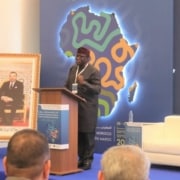
Closing of the First edition of the Forum of Regions of Africa

Around 500 delegates, from 30 countries including 21 African countries, and more than 80 Presidents of African regional governments participated in the event

SAIDIA, Morocco, September 11, 2022

The organisation of the very first Forum of the Regions of Africa at the continental level proved to be a success. Held in Saïdia, in the Oriental region of Morocco, the forum took place on September 8th and 9th, 2022. Around 500 delegates, from 30 countries including 21 African countries, and more than 80 Presidents of African regional governments participated in the event that “was an historical event” according to many.

The praise for this fruitful first edition organised by United Cities and Local Governments of Africa (UCLG Africa), in collaboration with the Association of Moroccan Region (ARM), the Oriental Regional Council (CRO) and the Ministry of Interior (through the DGCT) went along with a massive expression of gratitude from the majority of the participants towards the Moroccan authorities in general, and particularly towards His Majesty, King Mohammed VI.

One of the key moments of this closing day was the presentation of the FORAF Roadmap

This acknowledgement of gratitude was also expressed in the “Saidia Declaration” read by Professor Anyang  Nyong’o, Governor of Kisumu County in Kenya, which highlighted the need to make the regions of Africa structuring clusters of sustainable development on the continent and important milestones in the building of “the integrated Africa We want”. The “Saïdia Declaration” also affirmed the importance to call on national governments and development partners to make sure that the financial means of implementation of national public policies and global agendas reach the budgets of regional governments.

One of the key moments of this closing day was the presentation of the FORAF Roadmap which was drafted to give concrete objectives to all the presidents of the regions of Africa and invited them to strengthen their regional governments, financially, technically and democratically. The actions presented in the Roadmap took into account the ten-year plan of UCLG Africa, also known as GADEPPA 2.0. The Participants committed to collaborate with the African Continental Free Trade Area (AfCTA) secretariat and Afreximbank and encouraged the UCLG Africa secretariat to conclude a MoU with the aforementioned institutions. The Roadmap will be translated into an action plan that will be worked out by a working group composed of five (5) members, one (1) per region. This work plan will be presented during the Panafrican Council of UCLG Africa to be held in Tangiers, from November 1st to 3rd, 2022.

The office bearers of the FORAF was elected during the assembly held on September 9, 2022. The Executive Bureau of the FORAF is now composed of four vice-presidents (of Amoron’i Mania Region Madagascar, represented by her Président, Madam Aline Mamiarosa; the Association of the Regions of Morocco represented by her President, Madam Bouaida Mbarka, President of the Guelmin Region, Morocco; the North Region, Cameroon, represented by his President, Mr Oumarou Ousmanou; the Gauteng Province, South Africa, represented by its Premier, Mr. David Makhura (who was represented by Mr. Lebogang Maile, MEC of Gauteng Province, South Africa); and as President, the Forum of Governors of Nigeria represented by Dr John Olukayode Fayemi, Governor of Ekiti State, Nigeria. In his acceptance speech, the new president-elect of the FORAF emphasised that “it is about time that Africans stop agonising and start organising!”. The Forum of the Regions of Africa is a concrete first step leading to the emergence of the “Africa of the Peoples” called for by Agenda 2063 of the African Union, and a major shift for a bright future of the continent.

PJ :
Saidia Declaration

Interview Dr John Aloukayode, First president of FORAF

First Edition of the Forum of Regions of Africa (FORAF) -DAY 1: Advocacy for the emergence of an Africa of peoples

SAIDIA, Morocco, September 8, 2022-

Under The High Patronage of His Majesty The King Mohammed VI, the first edition of the Forum of Regions of Africa (FORAF), has been launched, this 8th September 2022, in Saïdia, the Oriental Region of Morocco. This gathering is organised by United Cities and Local Governments of Africa (UCLG Africa) , in collaboration with the Association of Moroccan Regions (ARM), the Council of the Oriental Region (CRO) and the Directorate General of Territorial Collectivities (DGCT) of the Ministry of the Interior of the Kingdom of Morocco.

Representing the Minister of Interior of Morocco, the Wali, Secretary General of Ministry of Interior, Mr. Mohamed Faouzi, the President of UCLG Africa, Madam Fatimetou Abdel Malick, the President of ARM, Madam Mbarka Bouaida and Mr. Abdennabi Bioui, President of the Regional Council of the Oriental Region took part to the official ceremony in presence of more than 400 delegates, thrilled to attend this historical moment held for the first time.

The proceedings are centered around “The contribution of Regional Governments to the sustainable development and to the dynamics of integration of Africa“.

At the opening ceremony on 8 September 2022, Madam Fatimetou Abdel Malick said in her statement “Decentralisation is now an irreversible movement in Africa. An increasing number of African countries have established a second level of governance between the national and local levels”.

More than 60 Presidents or Governors of regions from 21 African countries are attending this Forum, including Nigeria, Congo, Madagascar, Côte d’Ivoire, Mali, Niger, Cameroon, Mauritania, Kenya, South Africa etc. “The presence at this first edition of our Forum of representatives of so many African countries, is the recent expression of our common belonging to the great African family. It reflects our commitment to our natural, geographical and political roots”, said Madam Mbarka Bouaida to the attendees and to the press.

Mr. Mohamed Faouzi completed this statement, saying that: “The objective of this Forum is to achieve a vision that can define a framework for African citizens; a framework that meets the needs of the people, without compromising the needs of the future generations; a framework to enable regional officials to build Africa by, and for Africans”.

Mr. Abdennabi Bioui, President of Oriental Region, recalled that “the idea of creation the Forum of African Regions was born here, in our region, our land. This land connects the present to the past and anticipates the future with a spirit that understands that the goals of liberation from colonialism are the same as the goals of sustainable development, considering that at the end, in both cases, the objective is to achieve African development”.

The presence at this first edition of our Forum of representatives of so many African countries, is the recent expression of our common belonging to the great African family

Mr. Jean Pierre Elong Mbassi, UCLG Africa Secretary General,  underlined that he hoped that “through the discussions and deliberations that will be held during these two days we will be able to realise how much we can and should do to change the face of our continent, by commencing to plant the seeds leading to the emergence of the Africa of the Peoples beyond the Africa of the National States that is the Africa We Want”.

The Program of the day included the following sessions:

Panel 1 : Regional Governments and institutional Environment

Panel 2 : Regional Governments, climate change and resilience

Panel 3 : Regional Governments, and Territorial Competitiveness

Panel 4 : Regional Governments and the challenge of human and financial resources challenges

Panel 5 : Regional Governments and Open Government

Panel 6 : Regional Governments and African Integration

During the second day on 9 September 2022 the Forum will focus on the discussion of the roadmap of the FORAF and the election of FORAF office bearers.

First edition of the Forum of Regions of Africa to be held in Saïdia (FORAF)

This gathering is a concrete implementation of the decisions taken by the General Assembly of UCLG Africa during the 8th edition of the Africities Summit, held in Marrakech in November 2018

SAIDIA, Morocco, September 7, 2022/From 8th to 10th September 2022, the first edition of the Forum of Regions of Africa (FORAF) will take place in Saïdia (Morocco), in the Oriental region. Under the High Patronage of His Majesty King Mohammed VI, this Forum is organised by United Cities and Local Governments of Africa (UCLG Africa) , in collaboration with the Association of Moroccan Regions (ARM), the Council of the Oriental Region (CRO) and the Directorate General of Territorial Collectivities (DGCT) of the Ministry of the Interior of the Kingdom of Morocco.

This gathering, which theme is “The contribution of Regional Governments to the sustainable development and to the dynamics of integration of Africa”, is a concrete implementation of the decisions taken by the General Assembly of UCLG Africa during the 8th edition of the Africities Summit, held in Marrakech in November 2018, as stated by Mrs. Fatimetou Abdel Malick, President of UCLG Africa.

The FORAF will be the platform for the organisation and constitution of the elective General Assembly as the governing body within UCLG Africa

This Forum will bring together for the first time the presidents of regions, counties and federal states of more than 20 African countries that have a second level of decentralised territorial government, including Nigeria, South Africa, Burkina Faso, Cameroon, Côte d’Ivoire, Kenya, Madagascar, Mali, Niger, etc. More than 400 participants are expected to attend this event.

This first edition will be an opportunity to discuss the role of regional governments in the definition and implementation of development and integration strategies. It will highlight several themes that are at the heart of the missions of regional governments, including the economic, social and cultural development of territories; equipment, attractiveness and competitiveness of territories; adaptation to climate change, sustainability and resilience of territories; the contribution of territories to the achievement of sustainable development objectives, the achievement of the objectives of the Paris Agreement and the implementation of the Agenda 2063 of the African Union, cooperation between African regions to strengthen the dynamics of integration of Africa.

The FORAF will be the platform for the organisation and constitution of the elective General Assembly as the governing body within UCLG Africa. It is therefore expected that in the Forum, the members of this entity will be nominated and the chairperson elected on the 9th September 2022. The latter will represent the African continent at the World Forum of Regions of United Cities and Local Governments (UCLG), which governing bodies will be renewed at the UCLG World Congress to be held in Daejon, South Korea, from 10th to 14th October 2022.

According to Mrs. Abdel Malick, President of UCLG Africa, “the launch of FORAF is an important step in the integration process of Africa, a big step towards the emergence of the Africa of People”.

27th Session of the Executive Committee of UCLG AFRICA in Nouakchott(Mauritania))

The 27th Ordinary Session of the Executive Committee of United Cities and Local Governments of Africa (UCLG Africa) is meeting on 02 August 2022 in Nouakchott (Mauritania). The meeting is hosted by the Region of Nouakchott.
This 27th session of the Executive Committee is the first of the new leadership team of UCLG Africa elected at the General Assembly of 19 May 2022 in Kisumu, Kenya, during the Africities 9 Summit. It is devoted mainly to the approval of the accounts of the organization’s 2021 financial year, to the evaluation of the results of the Africities Summit (Kisumu, May 17-21, 2022), to the discussion of the strategic orientations of the new leadership team of UCLG Africa, and to the participation of Africa in the bodies and commissions of UCLG-World.

The official opening of the 27th session was honored by the presence of their Excellencies the Minister of Interior and Decentralization, the Minister of Finance and the Minister of Urbanism, as well as the President of the Association of Mayors of Mauritania, the Presidents of the Mauritanian Regions and several other important personalities.

The session was held under the chairmanship of Mrs. Fatimetou Abdel Malick, President of the Region of Nouakchott (Mauritania) and President of UCLG Africa

On the side of UCLG Africa, the session was held under the chairmanship of Mrs. Fatimetou Abdel Malick, President of the Region of Nouakchott (Mauritania) and President of UCLG Africa, in the presence of :
– Mrs. Christine Mba Ndutume, Mayor of Libreville (Gabon) and Vice-President of UCLG Africa for the Central Africa Region;
Mrs. Kouame Badou Harlette, spouse N’Guessan, Mayor of the Commune of Arrash, and Secretary General of the Union of Cities and Municipalities of Côte d’Ivoire, representing Mr. Claude Paulin Danho, President of the Union of Cities and Municipalities of Côte d’Ivoire (UVICOCI) and Vice-President of UCLG Africa for the West Africa Region;
– Mr. Jeffrey Sibisibi, President of the Botswana Association of Local Authorities (BALA) and UCLG Africa Vice-President for the Southern Africa Region;
– Mrs. Rohey Malick Lowe, Mayor of Banjul (Gambia), and President of the Network of Local Elected Women of Africa (REFELA).

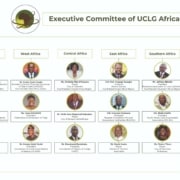
As a reminder, the Executive Committee of UCLG Africa is the body in charge of the political direction of the organization. The Executive Committee is composed of 16 members, 15 members elected by the General Assembly of UCLG Africa (3 for each of the 5 regions of Africa), plus the President of the Network of Locally Elected Women of Africa (REFELA) which is the permanent committee for gender equality of UCLG Africa.

For more information, please contact
Gaëlle Yomi: Tel: + 212 610 56 71 45
E-mail : gyomi@uclga.org

About UCLG Africa

United Cities and Local Governments of Africa (UCLG Africa) is the umbrella organization of local governments in Africa whose founding congress took place in 2005 in the city of Tshwane, South Africa. UCLG Africa is the result of the unification of three continental groupings of local governments according to the official language inherited from the colonial period: the African Union of Local Authorities (AULA), essentially English-speaking; the Union of African Cities (UVA), essentially French-speaking; and the African section of the União das Cidades e Capitais Lusófonas Africana, Americana e Asiatica (UCCLA), essentially Lusophone.
UCLG Africa currently brings together the 51 national associations of local governments operating in Africa as well as 2,000 cities and territories with more than 100,000 inhabitants. Through its members UCLG Africa represents more than 350 million African citizens.
A founding member of the world organization United Cities and Local Governments (UCLG), UCLG Africa is its regional section for Africa.
The general secretariat of the organization is established in Rabat, capital of the Kingdom of Morocco, where UCLG Africa enjoys diplomatic status as a Pan-African international organization.
UCLG Africa is also represented in the five regions of Africa through regional offices established: in Cairo, Egypt, for the North African Region; in Accra, Ghana, for the West African Region; in Libreville, Gabon, for the Central African Region; in Nairobi, Kenya, for the East African Region; and in Pretoria, South Africa, for the Southern African Region.

Rabat, Capital of African Culture and Culture in the Islamic World Hosts the 21st Annual Conference of the International Association of Schools and Institutes of Administration (IASIA) Under the High Patronage of HIS MAJESTY KING MOHAMMED VI – May Assist Him

The Conference will also be marked by the organization of a Moroccan Panel on “The New Development Model and Advanced Regionalization”

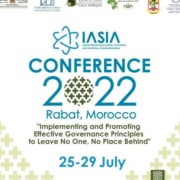
The Mohammed V University of Rabat, the Communal Council of the City of Rabat, the International Association of Schools and Institutes of Administration (AIEIA), the United Cities and Local Governments of Africa (UCLG Africa) and its African Local Government Academy (ALGA) are co-organizing  the 21st  Annual AIEIA Conference which will be held, for the first time in the Kingdom of Morocco, in the City of Rabat, from July 25 to 29, 2022, at the Faculty of Legal, Economic and Social Sciences of Agdal.


Organized under the Theme “The implementation and promotion of the Principles of Effective Governance, to leave no one and no place behind”, the IASIA Annual Conference will, on the one hand, highlight and discuss the 11 Principles of Effective Governance for Sustainable Development, designed by the members of the United Nations Committee of Experts on Public Administration (UN-CEPA), approved and adopted by the ECOSOC in 2018, and will allow, on the other hand, the anchoring of an Effective Governance based on the values ​​and principles of non-discrimination, participation, subsidiarity and intergenerational equity, as a guarantee of the well-being of populations, the development of territories and the sustainability of future generations.

During 5 days, the discussions will focus on the three fundamental pillars of Effective Governance, namely Efficiency, Integrity and Inclusion, Principles aligned not only with the Global Agendas for Sustainable Development of 2030, but also with the African Union’s Agenda 2063, so as to leave no one, and no place behind.

Participants, representing the IASIA Community and Fraternity, political leaders, public administration decision-makers, practitioners, academics, PhD students and young researchers, as well as other actors and stakeholders from various disciplines and sectors from all over the world are expected (more than 65 countries).

The discussions will focus on the three fundamental pillars of Effective Governance, namely Efficiency, Integrity and Inclusion

The Conference Program will be marked by:

– Official opening and closing sessions;
– Sessions dedicated specifically to the general Theme of the Conference (called ConferenceTheme Track);
– Parallel Workshops and Panels on issues related to the General Theme of the Conference;
– The holding of the Sessions of the ten (10) IASIA Working Groups which represent the backbone and one of the innovations in the modes of governance of this Organization, marked by some 291 scientific contributions;
– A Seminar dedicated to students of the Doctoral Cycle and another for publication support;
– Elections for the renewal of the Members of the IASIA Board of Management;
– The IASIA Awards Ceremony;
– A Session to present the Reports of these different Sessions.


The Conference will also be marked by the organization of a Moroccan Panel on “The New Development Model and Advanced Regionalization” which will be led and animated by eminent Professors from the MOHAMMED V University of Rabat.

The 21st Conference is supported and sponsored in particular by:

– The Parliament of the Kingdom of Morocco, House of Representatives;
– The Ministry of Youth, Culture and Communication;
– The General Directorate of Territorial Communities (DGCT) of the Ministry of the Interior;
– The European Commission;
– The United Nations Department of Economic and Social Affairs (UN-DESA)/Division of Public Institutions and Digital Governance – New York;
– The Ecological Transition Agency (ADEME) of France;
– UN-Women;
– The University Della Svizzera Italiana (USI) of Switzerland.

9th Africities Summit: Kisumu Did It!

Africities in Kisumu has indeed beaten the record reached at the 8th Africities Summit in Marrakesh, Morocco, in 2018

KISUMU, Kenya, May 22, 2022/

The last day of the Summit offered  an opportunity to take stock of the participation in the Kisumu Summit.

VIDEO

VIDEO

VIDEO

VIDEO

Download Declaration (EN): Here  / Read online here

The incredible gamble of UCLG Africa to organize for the very first time an Africities Summit in the intermediary city of Kisumu in Kenya proved to be a winning bet. Africities in Kisumu has indeed beaten the record reached at the 8th Africities Summit in Marrakesh, Morocco, in 2018. The figures speak for themselves:

-Participation in Marrakesh 8,300 registered delegates from 71 countries including 50 African countries; Participation in Kisumu: 11,000 registered delegates from 100 countries including 53 African countries;
-Participation in the Africities Exhibition Marrakesh 2018: 84 exhibitors; Kisumu 2022: 164 exhibitors.
-Number of sessions organized in Marrakesh 2018: 150 sessions during the 5 days of the Summit, which is on  average 30 sessions per day; Kisumu 2022: 180 sessions during the 5 days of the Summit, which is an  average of 36 sessions per day.
-Number of Special events organized in Marrakesh 2018: 5 special events:  Climate Day; Culture Day; Urban Planning Day; Women’s Day; Youth Day; and in Kisumu 2022: in addition to the 5 days organized in Marrakesh, additional 3 special events were held: Diaspora Day; Digital Day; Africa Trade and Investment Forum.

In terms of content the focus of the Summit’s proceedings was on how intermediary cities can better ensure the delivery of the key five main functions any subnational or local government  ought to deliver to the populations living in the territories within  its constituency, namely, 1. feeding the territory; 2.  planning and building infrastructure, amenities and housing in the territory; 3. providing basic services in the territory; 4. maintaining infrastructure and facilities in the territory; 5. administering and governing the territory.

The attention of participants was drawn to the fact that the triple health crisis, ecological crisis, geopolitical, and democratic crisis, calls for a rethink of the way these functions will be rendered from now on, given the rapidly changing business, social, and political environment under way.

It is in full knowledge of this very particular post-COVID-19 pandemic environment that the tripartite dialogue roundtable between ministers, mayors and leaders of subnational and local governments, and development partners took place on May 21, 2022 from 10:30 to 12:30. Each of the aforementioned stakeholders asked 5 questions to the two others. The resulted exchange was very rich and well appreciated by the audience who rated this tripartite roundtable as the ice on the cake of the Africities Summit.

Tripartite Dialogue Roundtable between Ministers, Mayors and Development Partners

The tripartite dialogue roundtable between African ministers, African mayors and leaders of subnational governments, and representatives of development partners was an invigorating discussion around finance, where mayors argued that the share of subnational governments in the management of public finance resources and expenditure has remained unacceptably low compared to what happens in other regions of the world.

Ministers for the most part seemed to agree that financial transfers from the national to subnational and local governments could be more. However, the tricky point for the ministers is how to ensure mutual accountability for the financial management at the local level taking into consideration the weak absorption capacity of subnational and local governments. Development partners on the other hand agreed that they should fund subnational governments more directly or find a way to do so.

“Development partners can be compared to children playing football who chase after one ball with no form or structure. Development partners also chase after one or two cities who are doing well and when one city does well, all the development partners do the same so as to show taxpayers their good work and give ourselves a pat on the back. We need to better coordinate ourselves as development partners to stop chasing after that one ball like children playing football but do development in a more structured way with intermediary cities as well as primary cities and make sure that that the whole system works for the development of the citizens” said Oliver Harman, Cities Economist at Cities that Work.

Similarly, mayors agree that they also need to coordinate themselves better to be able to guide development partners on how best to help subnational governments.

We need to work together as African cities to come up with policies that will be the same across all African countries

“We need to work together as African cities to come up with policies that will be the same across all African countries to guide development partners better and this needs to be something that can be done within the United Cities and Local Governments of Africa” said Julius Kitur, Mayor of Eldoret, Kenya.

During the session, leaders of government including mayors and ministers were called upon to be more accountable to citizens and put their personal interests last to ensure that we transform Africa.

“It is high time that we stop serving powerful individuals in governments and start serving the people. We need to learn to stop loving our jobs and money more than we love our people and countries” said Doreen Nyanjura, Deputy Lord Mayor of Kampala in Uganda.

The round table discussion ended with the official closing ceremony where the President of UCLG Africa, Ms. Fatimetou Abdel Malick, gave the closing remarks, the Governor of Kisumu, Prof. Anyang Nyong’o gave a farewell speech, and the Minister of Devolution in Kenya, His Excellency Hon. Eugene Wamalwa delivering a closing speech and declaring the proceedings of the Africities Summit definitively close on 21 May 2021 at 14:30.

The 9th edition of the Africities Summit in Kisumu ended on a festive note with a gala dinner where Morocco was awarded as the best designed country pavilion at the Africities Exhibition; 01Talent as the most living stand, and Koko Network as  the more innovative offer.

The Government of Kenya, the Council of Governors of Kenya, the County Government of Kisumu, and UCLG Africa were praised for the successful organization of the 9th edition of the Africities Summit in Kisumu.

At the closing gala dinner, the Secretary General of UCLG Africa, Jean Pierre Elong Mbassi read the ‘Final declaration of the Africities summit’ also tagged the “Africities 9 Kisumu Declaration”, which highlighted the need to make intermediary cities structuring clusters of sustainable development in Africa.

The Africities Kisumu Declaration also affirmed the urgency to raise awareness on the impact of climate change; hence the importance for local and regional governments of Africa to adhere to the Convention of African Mayors for Climate, and to adopt the necessary measures to prepare their territories to become resilient to climate change.

In addition,  the Declaration called on African National States to sign and ratify the African Charter on the Values and Principles of Decentralization, Local Governance and Local Development and ensure the proper implementation of the principles it contains. Women and Youth were identified as game changers for the realization of the Africa We Want, hence the call to commit  to the empowerment of Women emancipation and Youth  empowerment by promoting appropriate economic and other support programs. (Read the full declaration here ).

The next Africities summit will be in 2025.

Video: 9th Africities Summit – Highlight: https://bit.ly/3NwaFi8

Videos – Speeches of opening ceremony:
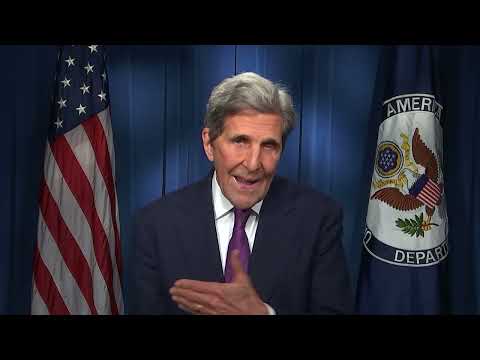
John Kerry: https://bit.ly/3a9QNCX
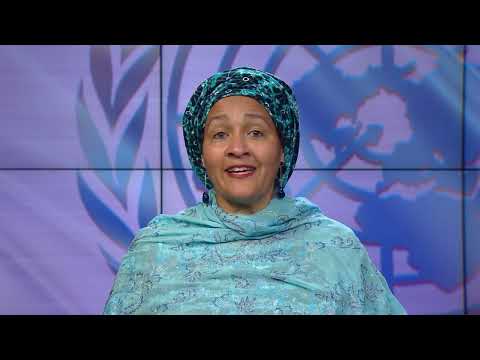
Amina Mohammed: https://bit.ly/3MNEN8M
Lupita Nyango’o: https://bit.ly/3wO0Cyb

9th Africities Summit: Official Opening of Political Segment

The main topic of the conversation was “Thriving the way for the future of Africa in a world of turmoil”

KISUMU, Kenya, May 20, 2022

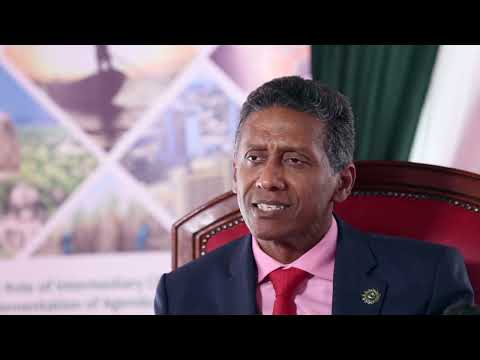
The fourth day of the Africities summit started with the official opening of the political segment which was marked by a conversation between two former African heads of State namely, His Excellency Joaquim Chissano, former President of Mozambique and His Excellency Danny Faure former President of Seychelles. The main topic of the conversation was “Thriving the way for the future of Africa in a world of turmoil”. The young elected officials invited the former heads of State to reflect and advise them around the unbalanced  share of public financial and human resources between the national level and the local  level; on the centrality of cities and territories as places hit by the consequences of climate change and paradoxically their absence at the table when discussing climate action; on the proposal to devise a program for upgrading tou7nghe infrastructure and equipment of local governments, including intermediary cities, within the pan-African framework, as was the case with the NEPAD major infrastructure program, for intermediary cities to play their rightful role as engineering places for the African Continental Free Trade Area, a booster for African integration; on making cross-border decentralized cooperation a tool for African integration; and finally on arguments to put forward to give hope to young Africans that they have a future on this continent instead for them dying in the Mediterranean trying to find their future outside the continent.

VIDEO

VIDEO

In response, His Excellency Joaquim Chissano told the leaders of local governments that as much as it is OK to engage national governments for a better share of public resources between the national and the local levels of government, there is need also to find creative ways of mobilising locally the resources they need.

It would be important for local governments to engage in dialogue between themselves and the central government and ensure that there’s a permanent space for dialogue through associations for example to discuss the issues they have” said His Excellency Joaquim Chissano, former President of Mozambique.

With regards to climate change, His Excellency Danny Faure urged United Cities and Local Governments of Africa to fight and ensure that local governments have a seat at the negotiating table during the upcoming COP 27 in Egypt. COP is the name given to the annual meeting of world leaders in a climate change capacity. COP27 will be the 27th such conference to take place in Sharm- Al-Sheikh, Egypt, in November 2022.

It is important that we have at the table representatives of intermediary cities and local governments. We also need to press that Loss and Damage as a facility is created and approved so that nations having difficulties because of climate change can benefit from this new facility” said His Excellency Danny Faure, former president of Seychelles. (Watch video Interview of HE Danny Faure: https://bit.ly/3sXRK81)

Loss and damage are a general term used in the United Nations climate negotiations to refer to the consequences of climate extreme events hitting communities ill-prepared to face them. Loss and damage refer to the consideration that the Africa is responsible for less than 4% of greenhouse gas emissions but is one of the regions of the world most impacted by the consequences of global warming it did not participate in producing. Loss and damage also refer to the compensation that Africa should be receiving from the rest of the world for the role it is playing in carbon sinking, notably through the Forest of the Congo Basin and Africa’s wetlands. It is about maintaining dignified living standards for the population in forest area to ensure that they do not engage in deforestation to earn a living.

On the other hand, it should be noted that a conversation took place between two former heads of State and Young Leaders of local governments of Africa aged 35 or below.

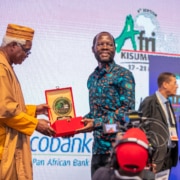
After the dialogue between the former heads of State and young leaders, an UCLG Africa honorary membership award ceremony was organised, during which the two former heads of State gave their honorary membership attributes to  the nominees in  the  5 colleges of UCLG Africa honorary members, namely the college of former mayors and leaders of subnational and local governments, the college of the academia, the college of the private sector, and the college of UCLG Africa partners, in exclusion of the college of former heads of State.

The following members received their honorary membership attributes from the hands of President Chissano and President Faure:

College of former Mayors and Leaders of subnational and local  government Governments of Africa: Ms. Rose Christiane Ossouka-Raponda, former Mayor of Libreville, and Prime Minister of Gabon; Mrs Celestine Ketcha Courtès, former Mayor of Bagangte, Cameroon, and former President, REFELA, Minister of Urban Development and Housing, Cameroon;   Mr. Jeannot Ahoussou Kouadio, President of the Senate, Côte d’Ivoire; Mr. Daby Diagne, former Mayor of Louga, Senegal, and former President last President of the United Towns Organization (UTO) ; Mr Hugues Ngouélondélé, former Mayor of Brazzaville, Congo, and former President of UCLG Africa; Mr Tarayia Ole Kores, former President, Association of Local Government Authorities of Kenya, ALGAK, and former President, UCLG Africa; Mr Khalifa Sall, former Mayor of Dakar, Senegal, and former President of UCLG Africa; Mr Mpho Moruakgomo, former President of the Botswana Association of Local Authorities, BALA, and former Vice President, UCLG Africa; Mr Thabo Manyoni, former Mayor of Magaung, South Africa, former President of the South African Local Government Association, SALGA, and former Vice President of UCLG Africa; Mr Eneas Comiche, Mayor of Maputo, Mozambique, former Vice President of UCLG Africa; Mr Ahmed Hamza, former Mayor of Nouakchott, Mauritania and former Vice President, UCLG Africa; Mr Omar Bahraoui, former Mayor of Rabat, Morocco, and former Vice President of UCLG Africa; Col. Maximo Ng’andwe, former mayor of Kabwe & former president of  the Local Government Association of Zambia ( LGAZ)  and Mr Simon Compaoré, former Mayor of Ouagadougou, and former member of UCLG Africa´s Executive Committee.

College of Academia: Professor Akinlawon Mabogunje, former Dean of the Faculty of Geography, University of Ibadan, Nigeria

College of the Private Sector: Mr Seidnaly Aphadi, Fashion designer, Niger

Category of UCLG Africa Partners: Mr. John Dossavi, President of RAPEC, Togo, the association of African Professionals in the area of Culture, the man behind the celebration of the UNESCO World Day of African and Afro-descendent Culture on 24 January every year; and Mr William Cobbett, former Director, at the Cities Alliance Secretariat, and former Director General for the National Department of Housing in President Nelson Mandela’s Government of National Unity, South Africa.

MEETING OF MINISTERS

The Ministers’ meeting is one of the three parallel meetings of the political segment being held over the last two days of the Africities Summit.  The Ministers’ meeting includes African ministers who are members of the African Union’s Specialized Technical Committee on Public Service, Local Government, Urban Development and Decentralization (STC 8); as well as ministers in charge of Finance and/or the Economy.

Drawing lessons from the COVID-19 pandemic, the ministers confirmed the resolve of African governments to minimize dependency from the world market for commodities and services indispensable for the day-to-day living conditions of the people such as food systems or health services; and strive and improve self-reliance through the promotion of local economies economic that connect closely intermediary cities with their rural hinterlands, which should be instrumental to building a more balanced spatial development of human settlements at national, regional and continental levels, in line with the UN´s New Urban Agenda.

The ministers confirmed that COVID-19 puts a huge burden on African public finances that makes it difficult for the national level to make adequate transfer of resources to the local governments as it should have. They suggested therefore that innovative forms of funding be sought for subnational and local governments, including improving local government owned-sourced revenues, but also the recourse to innovative instruments such as public-private-partnership or bonds issuing on the capital market. The proposal by UCLG Africa to set up a special purpose vehicle, the Africa Territorial Agency, ATA, is a welcome move to the right direction and should be supported.

The ministers also confirmed the rightness and urgency to pay more attention to intermediary cities in national urban policies. They acknowledged the need to bring the issue of the role of cities including intermediary cities in the structural transformation of Africa to the attention of the heads of State and Government of the African Union to form part of the agenda of one of their nearest conferences, with the support of the African Union Commission.

The ministers also bought in the proposal to make culture the fourth pillar of sustainable development in sync with the proposal of the 2021 African Union Year tagged the African Year for heritage, arts, and culture. They fully supported the proposal by UCLG Africa to celebrate the African Capitals of Culture biennially. They welcomed the celebration of the city of Rabat as the first African Capital of Culture for the years 2022-2023.

The ministers acknowledged the fundamental change introduced by the digitalization of society. They committed to support the digital transformation of the continent and committed to facilitate ICT investment and equipment as well as skilling local governments staff in digital governance. They welcomed the establishment of the network of smart intermediary cities headed by the City of Benguerir, Morocco.

The ministers also welcome the adoption of the Local Government Charter on Gender Equality and committed to the implementation of its provisions in the different African countries.

It is important that we have at the table representatives of intermediary cities and local governments

The ministers finally discussed and adopted the questions they wished to ask to Mayors on the hand, and to Development partners in the other hand, in the framework of the tripartite dialogue roundtable between ministers, mayors and development partners. They also agreed on the five ministers that would be on the delegation of ministers at the tripartite dialogue roundtable to be held on May 21, 2022, namely, the ministers from Tanzania, Rwanda, Niger, Mozambique, and Egypt.

We have done enough exchanges, benchmarking, comparisons, contrasts, a feel of best experiences, and also what level each one of us is at. It is now really a question of putting into practice what we are preaching when we get back; and come the next convention, we should be able to report on the deliverables and what we have picked out of such a large convention and hopefully it should not be a talking shop” said Hon. Gary Nkombo, Minister of Local Government and Rural Development, Zambia.

MEETING OF MAYORS

The meeting of mayors and leaders of subnational and local governments of Africa was first called to reflect on the implementation of the decentralization policy within the African continent. The participants in the meeting recommended that the triennial Report on the institutional enabling environment created by the national governments in favor of city and subnational and local governments serve as the basis of a permanent dialogue between the central State and the local governments on the implementation of the decentralization policy. The celebration of the Decentralization Day on August 10 each year can serve as a moment for presenting the local governments´ perspective of the implementation of the decentralization policy in each African country.

The meeting of Mayors recognized that local governments has been at the forefront in fighting unforeseen COVID-19 pandemic, which has resulted in unexpected expenditure, and the reduction of owned-sourced revenues of around 30% to 50 %. Hence the proposal to include subnational and local government among the beneficiaries of Post-COVID support packages.

The meeting of Mayors gave its full support to the setting up of the Africa Territorial Agency, the special purpose vehicle aimed at facilitating access of African cities and territories to the capital market. The meeting also praised the effort of UCLG Africa to facilitate access of African local government to climate finance; and fully supported the organization of a Forum of Mayors for Climate in the official program of COP 27 in Sharm-Al-Sheikh, Egypt.

The meeting of Mayors recognized that, from now on, the digital transformation of subnational and local governments is a must and has become the urgent duty of the day. They therefore committed to embark into the digitalization their governance and operations. They praised the efforts of UCLG Africa that has digitalized the operations of its Academy, ALGA, by putting in place an e-academy and welcome the partnership established with the 01Talent Company aiming at producing 500.000 young coding specialists in African cities and territories within the coming 10 years. The mayors as well welcomed the proposal to set up a e-trading capacity building program to allow young Africans to become traders on the principal stock exchange in the world while still residing back home in Africa. Mayors also recommended the involvement of all stakeholders of the territory in digital transformation through the development of living labs approaches.

The meeting of Mayors valued the decentralization cooperation as a means to associate subnational and local governments into the dynamism of African integration; to fight discrimination against migrant populations; to embed  the implementation of the African Continental Free Trade Area into the social, cultural  as well economic realities of the continent reflected in intermediary cities; and to participate in the early warning mechanism on conflicts put in place by the African Union at the level of the Regional Economic Communities. To that effect, the meeting of Mayors recommended that a mechanism be in place to encourage the participation of local governments in the regional economic dynamic. An example of such mechanism is given by the Council of Territorial Governments, CCT, established as a body the West African Economic and Monetary Union, WAEMU, a part of the Economic Community of West African Stated (ECOWAS). The meeting of Mayors recommended therefore to put in place a council of subnational and local governments in the different Regional Economic Communities, mirroring the High Council of African Local Authorities set up as a consultative body of the African Union.

The meeting of Mayors recommended that all regional economic communities define cross-borders decentralized cooperation programs for cities and territories to be able to transform the borders of African countries inherited from colonial times from “breaking points to stitching points”, following the wise word of His Excellency Alpha Oumar Konaré, former President of Mali and former President of the African Union Commission.

The meeting of Mayors urged all African countries to sign and ratify the African Charter on the Values and Principles of Decentralization, Local Governance and Local Development. The meeting also called on all city and territorial governments of Africa to adopt the African Charter on Gender Equality proposed by the REFELA, the network of female Mayors and Local Elected Officials of Africa.

The meeting of Mayors praised the initiative of the Kingdom of Morocco to set up an African Fund for International Decentralized Cooperation that supports city-to-city partnerships in Africa; and called for the setting up of such decentralization cooperation funds in many other countries of Africa in order to build contribute, through robust decentralized cooperation programs, to the emergence of the “Africa of the Peoples above and beyond the Africa of post-colonial National States”, thus contributing to building African integration from its cities and territories.

The meeting of Mayors considered that intermediary cities are the support points for the emergence of strong local economies, a sine qua non for the bifurcation towards the road to a more economically resilient, ecologically sustainable, and socially just and inclusive development pathway. The meeting supported therefore the effort of cities and territories engaged in the rethinking of their development policies and strategies, taking into account the Sustainable Development Goals and the objectives of Agenda 2063 of the African Union.

The meeting of Mayors endorsed the proposal by the Youth Day to create youth empowerment councils bringing together youth organizations to take care of identifying opportunities for younger generations in terms of education, employment, and investment, and to advise the municipality on policies dedicated to youth in order to address the challenge of youth at odds with peaceful social relations and prey to delinquency and crime.

We have discussed several things but one of the key things that we hope will be implemented after the tripartite discussions is the harmonization of structures across Africa. This is because some countries have a minister in charge of Decentralization working directly with local authorities and other countries do not have it. This is why there is a discrepancy in budgets because some countries have 2% of their national resources allocated to subnational and local governments budgets while others have 15%. This is a huge difference and harmonizing of infrastructure would be a win” said Mrs. Khady Niang SYLLA, Deputy Mayor of Dakar.

The meeting of Mayors then approved the five questions they would ask to ministers and development partners during the tripartite dialogue roundtable as well the delegates representing the Mayors and leaders of subnational governments, namely, Mayor Mrs. L´khiel, Mayor of Arbaoua, Morocco; Mrs. Kady Niang Deputy Mayor of Dakar, Senegal, Mrs. Maria Helena Langa, Mayor of Mandlakazi, Mozambique; Mr. Rama, Mayor of District 4, City of N’Djamena,  Chad; and Mr. Kitour, Mayor of Eldoret, Kenya.

MEETING OF DEVELOPMENT PARTNERS

The Development Partners meeting approved the 5 questions to be submitted to the ministers and mayors and subnational governments leaders. They also debated and proposed the roadmap to be adopted at the end of the Summit. This roadmap is supposed to make sure the support of development partners contributes to strengthening the place and role of intermediary cities in the implementation of the United Nations´ 2030 Agenda and of the African Union´s Agenda 2063.

One of the things we ask the mayors as development partners is what do you want and what do you need? We do ask these questions because local authorities are the best engineers of development. We hope that some of the donors including the major players will start to say:  we want to see how to finance local authorities directly”, said Laurent Bossard, Director of the Sahel and West Africa Club – OECD.

Upcoming sessions

On May 21st, the focus will be on the tripartite roundtable between ministers, mayors, and development partners, and on the presentation of declarations and adoption of the roadmap for the ninth edition of the Africities summit, and the official closing session, followed up by the official closing gala dinner.

Video: B-Roll Day 4: https://bit.ly/3LSnAKc

9th Africities Summit – Digital, Culture, Women’s Rights and Youth: Africa is Organizing itself from the Local Level

ATIF aims to help local government to respond to one of the 5 key functions for the city or territory: providing cities with basic services and amenities.

KISUMU, Kenya, May 18, 2022

The first edition of the Africities Trade and Invest Forum (ATIF) took place during the second day of the ninth edition of the Africities Summit. The event held by the AfDB, AFREXIMBANK, AfCFTA, ABSA, UNCDF, and UCLG Africa (www.UCLGA.org) was chair by Dr. Amani Abou-Zeid, Commissioner for Infrastructure, Energy and Tourism of the African Union Commission. ATIF aims to help local government to respond to one of the 5 key functions for the city or territory: providing cities with basic services and amenities. The Africities Trade and Investment Forum (ATIF) brought together leaders of African cities and territories, private and public investors, as well as service providers. For the very first time, a matchmaking permanent platform between African local authorities and investors interested in local Africa was launched. The idea is to explore the business opportunities available in African territories and discuss the investment strategies according to the demographic, economic and financial contexts and to the potential of Africa. From there, partnership contracts leading to the realization of investments within the local and subnational governments of Africa will be launched.

«We need cityfriendly vehicles and an eco-system of cityfriendly finance experts because cities have unique characteristics. We see the Africa Territorial Agency as a fundamental tool that needs to grow organically and having regional chapters could be the way forward because of the different political and legal systems. We are delighted to work with UCLG Africa on how to incubate this and bring it to life and we hope to have some good news about it in the future», said David Jackson, Director of Local Development Finance Unit at UN Capital Development Fund (UNCDF).

At the end of the session, UCLG Africa and AfDB signed a contract entitled: Municipal CFO Initiative. The contract aims at strengthening fiscal capacity and financial autonomy and municipalities in 2022.

Digital Day

The ninth edition of Africities is the first to be organized since the start of the Covid-19 pandemic. The health crisis has more than ever demonstrated the importance of digital technology, not only in ensuring the survival of several sectors of the economy but also in accelerating the transformation of territorial public services. This marked a major milestone in the evolution of territories. During that day, participants talked about strategies to develop a digital master plan from and for the territories, especially by considering African specificities.

“Mapping solutions from other parts of the world does not always work. We need local digital solutions created by locals. The first step to ensuring this happens is to raise the digital skills of the populations and to also change their mindset to expect and use technology”, said Nicolas Sadirac, 01Talent Chief Pedagogic Officer and Co-founder.

01Talent Africa is the pan-African talent agency which aims to identify, develop and connect to the professional world 1 million high-level developers globally, by 2035 through the combination of a proven educational, sustainable, and economically exponential model.

For the very first time, a matchmaking permanent platform between African local authorities and investors interested in local Africa was launched

Digital day was also the occasion to launch the African Smarts Cities Network.

Culture day

Culture is the fourth pillar of sustainable development. Culture is vital for cities, for nations and for humanity itself. During this session, a consensus was reached to ensure that the fight for women’s rights, young people, indigenous and vulnerable communities, as well as the fight for the defense and promotion of all cultures that are threatened by hegemonic and global trends. There are so many cultural challenges for local authorities: cultural empowerment of communities, promotion of non-standardized creativity, support of solidarity and peace. “Culture is not just a question of entertainment or business. It is also a question of our core values for our peaceful and common life on earth. Where there is culture in the form of art, music, fashion, theater, film, jewellery then there’s peace » said Alphadi Seidnaly, UNESCO Artist For Peace.

Mrs. Rohey Malick Lowe, new president of REFELA 

The General Assembly of the Network for Locally Elected Women of Africa (REFELA) renewed its leadership.  REFELA is the most important network of local elected women of Africa. Ms Rohey Malick Lowe has been elected president for the next 3 years.

Local government is the level of government closest to the people, therefore if the lives of the people need to be impacted positively, action must be taken at the local level. Moreover, we need to consider the importance of women in our leadership roles. When women are called upon to lead, they outperform the men and statistics have shown that” , said Rohey Lowe, Mayor of Banjul and newly elected REFELA President.

Africa is the future, so is its youth. And for the youth of Africa, elected officials as well as students and academics, one of their main concerns and challenges is the climate change. Climate change is a clear and present danger for all in the continent, but especially for the most vulnerable communities of Africa. Flash floods, desertification and deforestation, climate induced migrations, loss of biodiversity, all these effects of climate change remind the young African how critic is the time we are in and how urgent a shift of policy at all levels of governance is need. Young Africans, gathered around the YELO (Young Elected Officials) network, talked about the ways to be more involved in the decision making. “We can’t wait, the planet can’t wait, our continent can’t wait, and our generation can’t neither. We are committed for climate justice now” said Sathya Naidu, member of the parliament of city of Victoria,

On 19 May, the sessions on Means will be focus on UCLG Africa Elective general assembly, Women´s Day, Youth Day, and the Mayors Forum on African cities for Clean Air.

Note: Don’t miss the daily press conference at the venue at 8:30 AM. Venue : Media Centre.

Find all the information: Presentation / Program / Speakers onwww.Africities.org