
Opinion piece | One speech, one continent: Mohammed VI’s roadmap for Africa’s territories [By *Jean-Pierre Elong Mbassi]
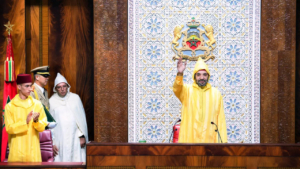 United Cities and Local Governments of Africa, the umbrella organisation representing the community of local authorities on the African continent, welcomes the speech delivered on 10 October 2025 by His Majesty King Mohammed VI at the opening of the first session of the fifth year of the 11th legislature of the Moroccan House of Representatives. In his speech, His Majesty King Mohammed VI emphasised the dual concepts of ‘social justice and the fight against territorial inequalities’ as the matrix that should guide the sustainable and inclusive development of the Kingdom of Morocco. This strategic orientation is valid not only for Morocco but also for Africa as a whole.
In this speech, His Majesty King Mohammed VI emphasises the dual concepts of ‘social justice and the fight against regional inequalities’ as the framework that should guide the sustainable and inclusive development of the Kingdom of Morocco. This strategic direction is valid not only for Morocco but also for Africa as a whole.
It reflects the conviction shared by the members of UCLG Africa that development is local or it is not development at all, and that the territorial level is the level of governance where improvements in people’s living conditions are demonstrated and experienced. The territory must therefore be considered as the strategic level for positive transformation of people’s lives in the economic, social, environmental and cultural spheres.
There can be no social justice without spatial justice. This truth, expressed by His Majesty King Mohammed VI in his speech to the Moroccan House of Representatives, has implications that extend far beyond Morocco and apply throughout Africa. UCLG Africa firmly believes that it perfectly sums up the letter and spirit of the African Charter on the Values and Principles of Decentralisation, Local Governance and Local Development adopted by the Heads of State and Government of the African Union at their Summit held in June 2014 in Malabo, Equatorial Guinea.
By setting out concrete measures to implement this strategic direction, and supplementing these measures with instrumental modalities, the royal speech has, in a sense, mapped out a roadmap that UCLG Africa intends to use as inspiration to translate into reality the vision adopted by its members, namely to contribute to building African unity and promoting its development from within its territories.
 The content of the royal speech delivered on 10 October 2025 to the House of Representatives is particularly welcome at a time when Morocco is preparing to host the World Organisation of Local Authorities (UCLG) Congress in Tangier in June 2026, of which UCLG Africa is the regional section for Africa. The royal speech is perfectly in line with the theme of the UCLG World Congress in June 2026 in Tangier: ‘Times of disruption, transformation and resilience.’ This theme emphasises how local and regional governments can respond to current challenges at a pivotal moment of geopolitical upheaval, when multilateralism structured around the United Nations is being called into question.
Thanks to their long history of decentralised cooperation, local authorities can offer an opportunity to regenerate and reinvigorate international relations by drawing on local multilateralism. Through partnerships between local authorities focused on the Sustainable Development Goals (SDGs), economic and cultural exchanges, and addressing the major challenges of our time, such as climate change and migration management, among others, decentralised cooperation offers an opportunity to root international relations in the lived experience of local populations and in the long term, but also to give them a more human face.
In Africa, Morocco is a pioneer in this new dynamic of promoting inter-African South-South diplomacy between cities and territories. To this end, Morocco has set up the Fund for Support to Decentralised Cooperation (FACDI), which helps to revive relations between Moroccan local authorities and their counterparts in other African countries. These relations are based on concrete cooperation projects that improve the living conditions and environment of local populations, while developing mutual knowledge and understanding, thus laying the foundations for the emergence of an Africa of the People, one of the key aspirations of the African Union’s Agenda 2063.
Published in AFRIMAG.