
Workshop on the Readiness project for access to climate finance by local governments in the WAEMU region
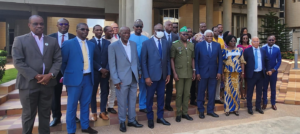 A workshop on the Readiness project for access to climate finance for local authorities in the WAEMU (West African Economic and Monetary Union) space, was hosted by Lomé, the capital of Togo, on July 3, 2023. The workshop was organized by the Togolese Ministry for the Environment, United Cities and Local Governments of Africa (UCLG Africa), the West African Development Bank (BOAD) and the Green Climate Fund (GCF).
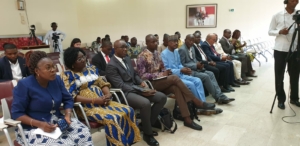
It was attended by the focal points of the eight WAEMU countries, the Presidents of the National Associations of Mayors, as well as representatives of the WAEMU Council of Local Authorities, the United Nations Development Programme (UNDP) and the European Commission.
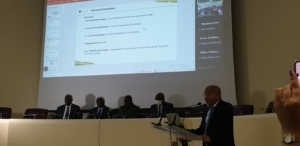 The opening session was marked by the speeches of the project’s main partners: Mr. Alexis Aquereburu, Vice-President of the Association of the Municipalities of Togo, Mr. Jean Pierre Elong-Mbassi, Secretary General of UCLG Africa, Mr. Luc Setondji Atrokpo, 1st Vice-President of the WAEMU Council of Local Authorities, Colonel Koffi Aoufoh Dimizou, Representative of the Minister of the Environment and Forest Resources of Togo, Mr. Mohamed Nbou, Special Advisor on Climate, Biodiversity and Food Systems at UCLG Africa, and Mrs. Mery Yaou, Director of the Environment at the Ministry of the Environment and Forest Resources of Togo.
The workshop was organized in three parts:
The first consisted in presenting the broad outlines of the Readiness program for the WAEMU region. The 2nd focused on describing the methodology for implementing the territorialization of NDCs (Nationally Determined Contribution) and developing the project to be submitted to the Green Climate Fund. The 3rd recalled the criteria and financing instruments of the Green Climate Fund.
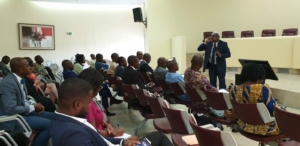
These presentations were the subject of debate and exchanges between the participants on the various aspects relating to the process of implementing the Readiness program activities of the WAEMU countries.
 The Readiness program for local governments in the WAEMU area aims to equip these authorities, on the one hand, to include the recommendations of the NDCs in the definition of their Climate-Energy plans, notably in the various local and regional post-Covid economic recovery programs; ensure that the Climate-Energy-Biodiversity plans drawn up within the framework of the Covenant of Mayors for Sub-Saharan Africa (COM SSA) are aligned and consistent with the NDCs of their respective countries, as well as their means of implementation.
The overall aim of the Readiness program is to build the capacities of the various players involved in the territorialization process, and to develop a portfolio of Climate-Energy projects at city and regional level with a view to submitting funding applications to the Green Climate Fund or other climate finance institutions.
All partners advocate that climate action should be the result of a fusion of bottom-up and top-down approaches, involving collaboration between local and central governments. Africa has demonstrated that its local authorities have the capacity to develop projects eligible for financing by the Green Climate Fund.
 With Africa’s population set to double by 2050, and the need for climate financing estimated at 340 billion dollars over the period 2020-2030 for the African continent, there is an urgent need to step up joint action at WAEMU level, and the regional Readiness project is perfectly in line with this.
The 27-month Regional Readiness project aims to address these challenges by building the capacity of institutions at the local level in the WAEMU region, through three main activities:
– Setting up measures and systems for planning, programming and implementing activities financed by the Green Climate Fund.
– Preparation of a concept note and Project Preparation Facility (PPF) for submission to the Green Climate Fund.
– Sharing knowledge and lessons learned.
These exchanges will take place in workshops at various stages of the program’s progress, at the level of each of the 8 WAEMU countries, as well as at the regional level. The proper implementation of the regional Readiness program will be overseen by a steering committee comprising all the program’s stakeholders, reflecting the necessary collaboration at all levels, from national to regional and local, but also with financial partners such as BOAD.